

Common names: Cape francolin (Eng.); Kaapse fisant (Afr.)
The Cape Spurfowl is the largest of the six spurfowl species found in South Africa. They are part of the pheasant family, Phasianidae. They were formerly known as francolins but have since been grouped with the spurfowls as the males have backward-facing spurs on their legs. Their striking plumage and curious behaviour make them fascinating birds to watch.
Derivation of scientific name:
The genus Pternistis is derived from an Ancient Greek word pternistēs, meaning the one who strikes with the heel. The Cape Spurfowl was first described by J.F. Gmelin in 1789.
Description/How to recognise a Cape spurfowl
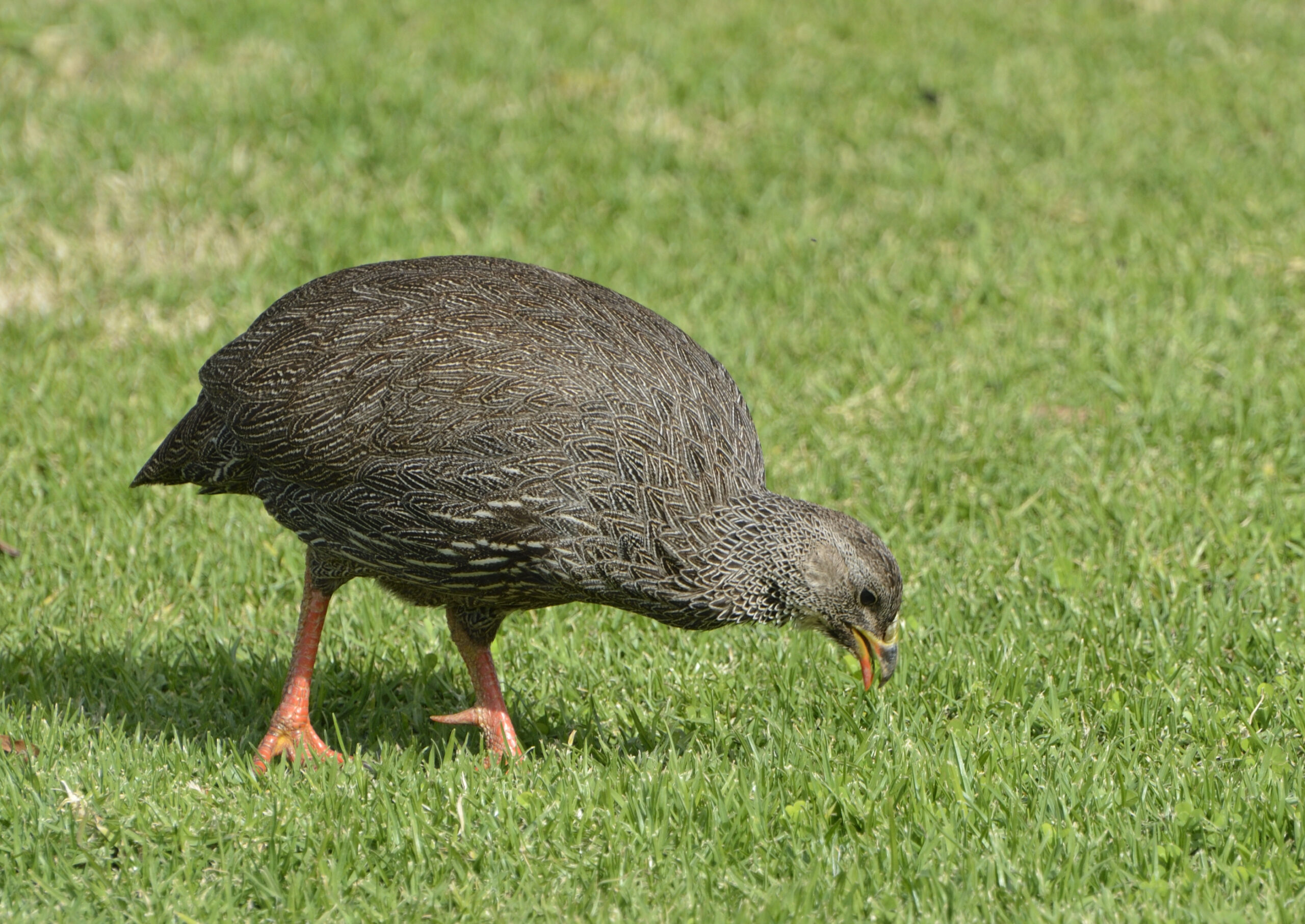
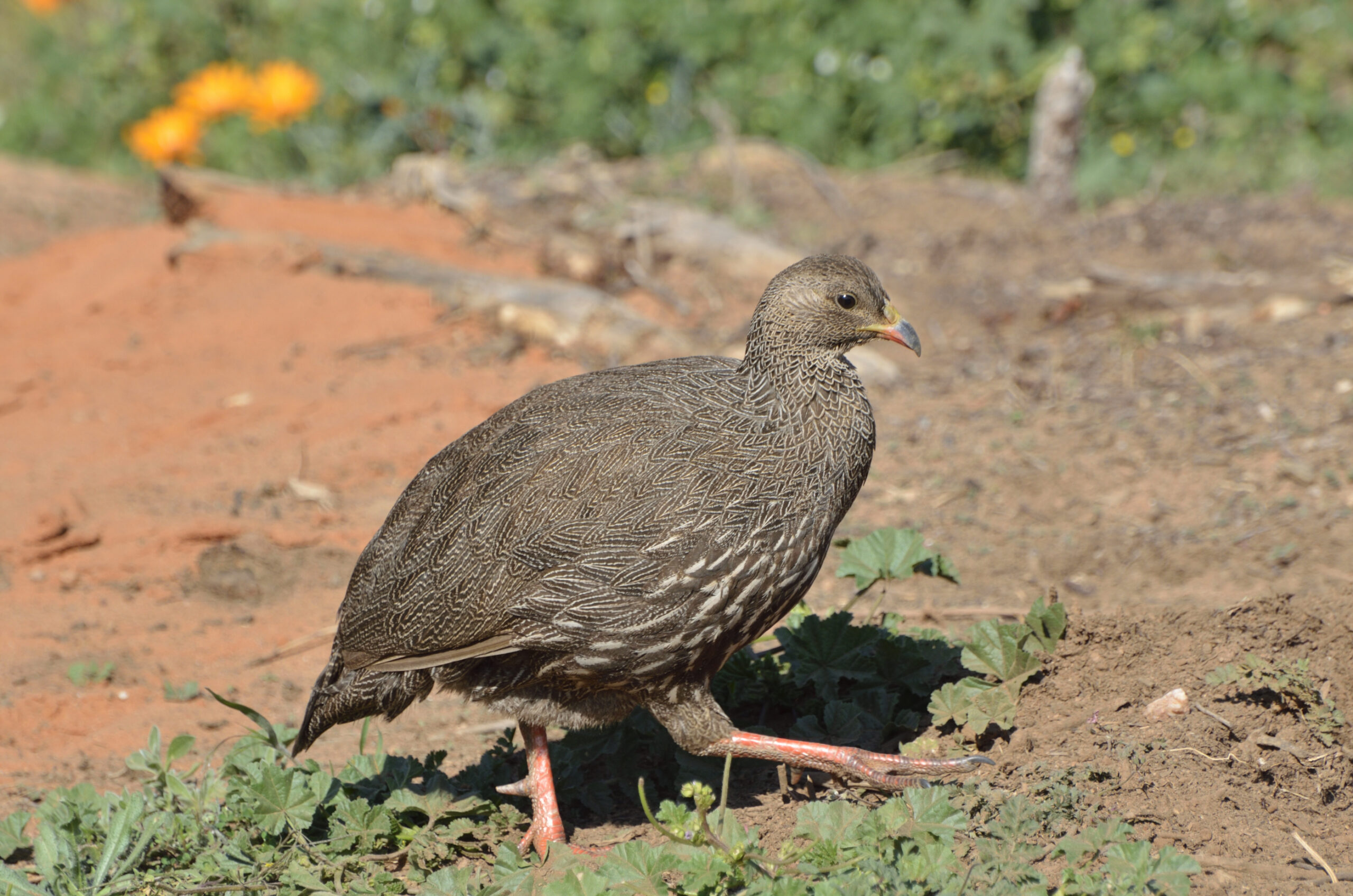
The Cape spurfowl is dark brown with fine, dense grey and white vermiculate patterns and bolder white stripes on their lower breast and flanks. Their average size is 40–43 cm, with the males being larger than the females. Their legs are pale red or orange-red in colour. The bill is pale red and has a dark top with a yellow base.
Their throat is white with dark markings. The Cape Spurfowl is easy to distinguish from other spurfowls by its pale cheeks and dark cap. The plumage is similar between the sexes, but the males are larger and have one or two spurs, while the females have one reduced spur or no spurs at all. The juvenile looks like the adult, but with duller plumage.
Getting around
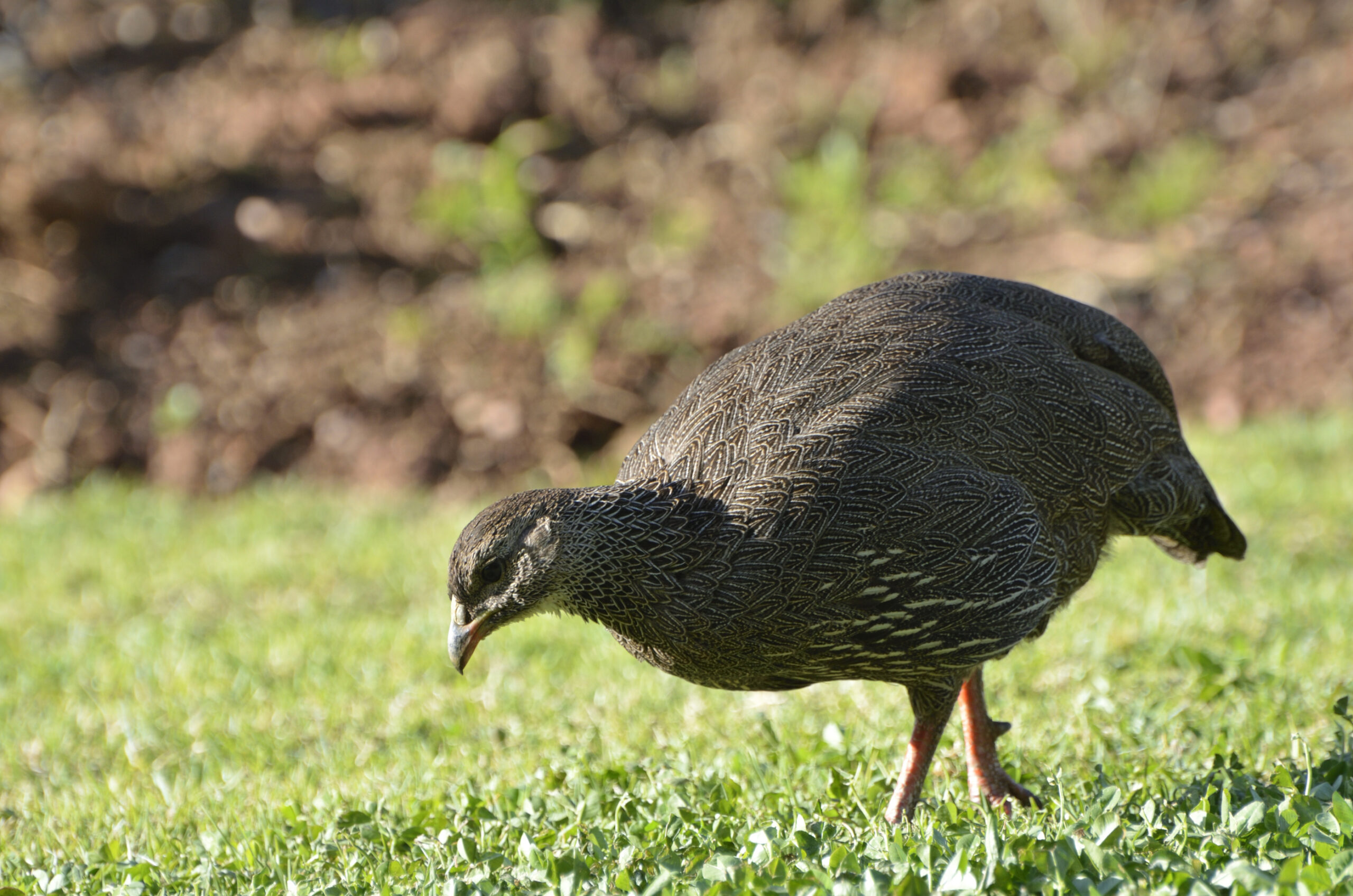
Cape Spurfowl spend most of their time foraging on the ground. They prefer to run away from danger and will only take short, fast flights as a last resort.
Communication
Cape Spurfowls use various calls to communicate. The male makes a distinctive, loud ‘cackalac-cackalac-cackalac’ call. The guttural call is mostly made in the breeding season at dusk and dawn. They use it to advertise their territory, to keep other males away and to lure females. Partners use a bonding call when they are separated. The mother and her offspring will also use a bonding call to locate each other. They will make constant alarm calls when there is a predator in the area and a harsh call when they take short flights.
Distribution
The Cape Spurfowl is endemic to southern Africa and is common within its range. They occur in the Western Cape and Eastern Cape, with small populations near the lower Orange River and parts of southern Namibia. They have also been introduced to Robben Island.
Habitat
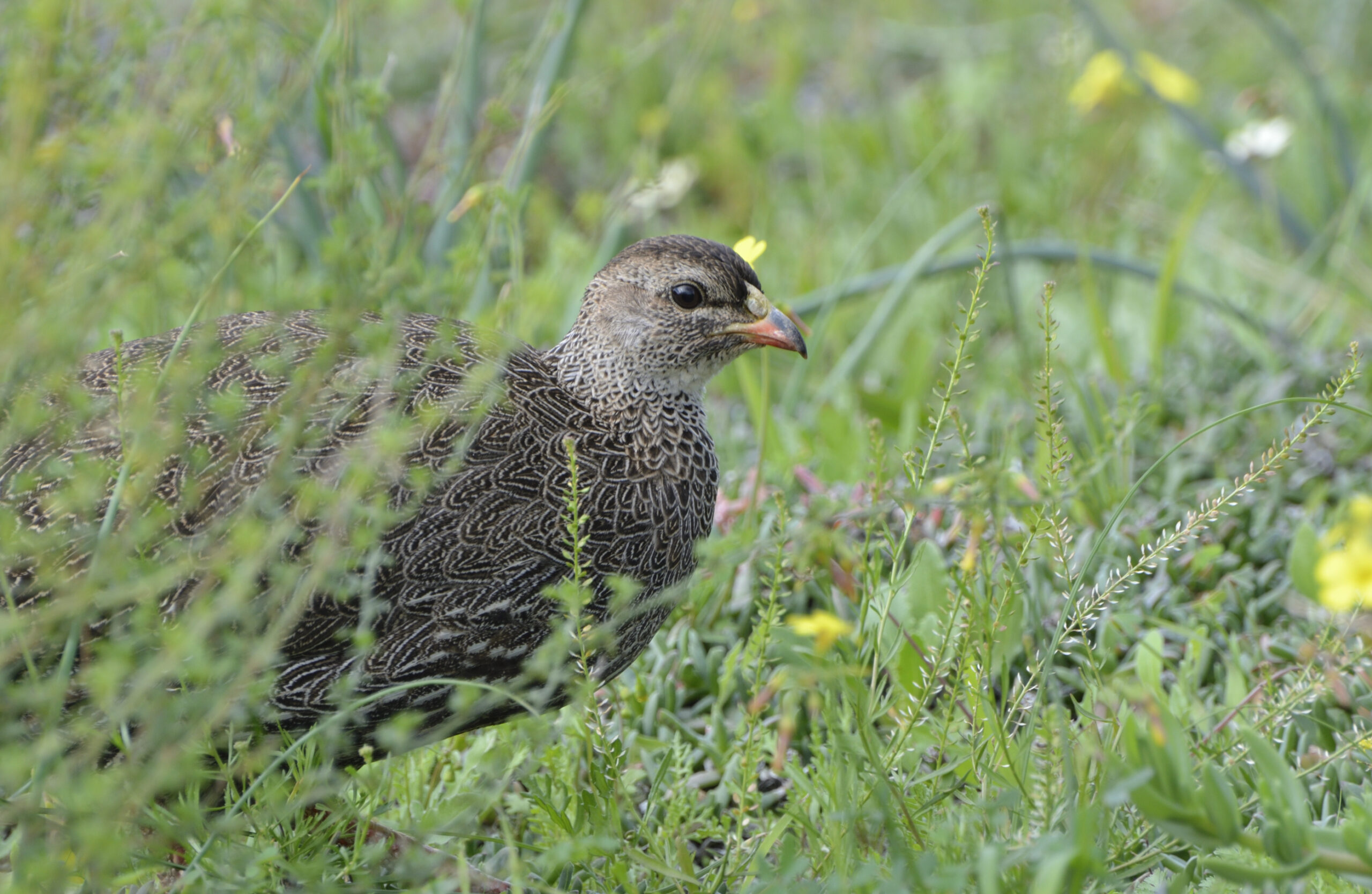
Cape Spurfowl is mostly found in Fynbos and Renosterveld but also occurs in the adjacent Succulent Karoo and coastal shrubs. They often venture into domestic gardens or agricultural lands and select an area near a water source. They still relies on pockets of natural vegetation on farms and near domestic gardens to breed.
Food
Cape Spurfowl search for their food by scratching on the ground with their feet and bill. They are omnivorous and change their diet between seasons and according to availability of food. In winter, their diet mostly consists of roots, bulbs, berries, shoots, seeds and grain. They have also been observed eating flowers and fruits. In summer, they feast on small insects such as termites, ants, locusts and snails. The added protein is needed during the breeding season.
SEX and LIFE CYCLES
The species is monogamous or possibly monogamous, remaining mated in spring and early summer. The breeding season is from August to January. The nest is a scrape in the ground, lined with grass, well hidden under dense shrubs. The female lays four to eight pinkish or brownish-cream eggs from July to February. She incubates them for 22–25 days until they hatch. After 12 days, the chicks can fly for short distances.
Family life
The Cape Spurfowl is often found in pairs or in small family groups, called coveys. The covey consist of the monogamous pair and its offspring. They will often roost together. The males are territorial and will chase each other in the breeding season to determine dominance.
THE BIG PICTURE
Friends and foes
Enemies of the Cape Spurfowl include jackals, caracals, leopards, raptors, snakes, mongoose and domestic cats and dogs. Friends of the Cape Spurfowl are people who do not use pesticides and have indigenous gardens that provide enough cover and food sources to attract them.
Smart strategies
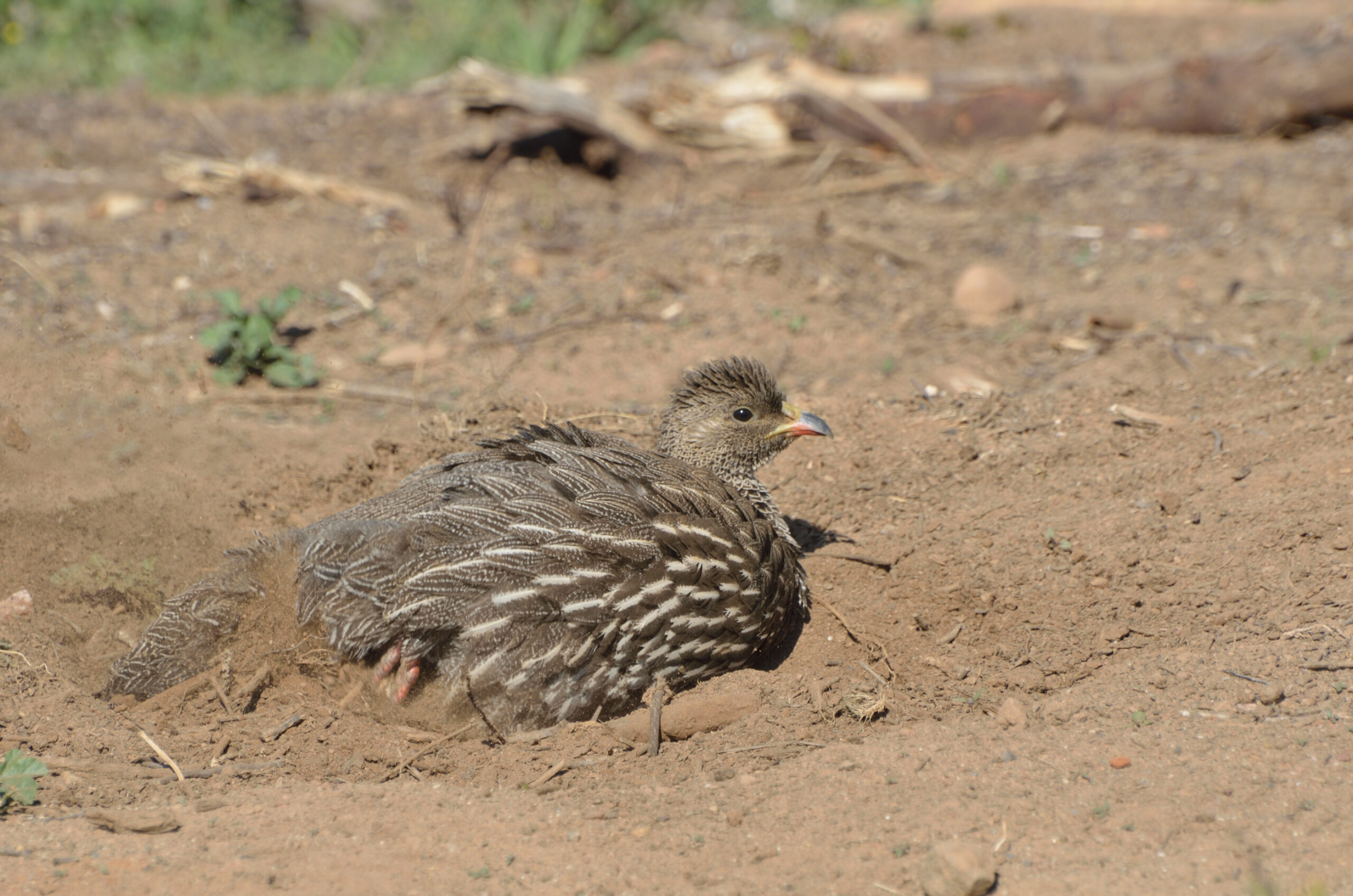
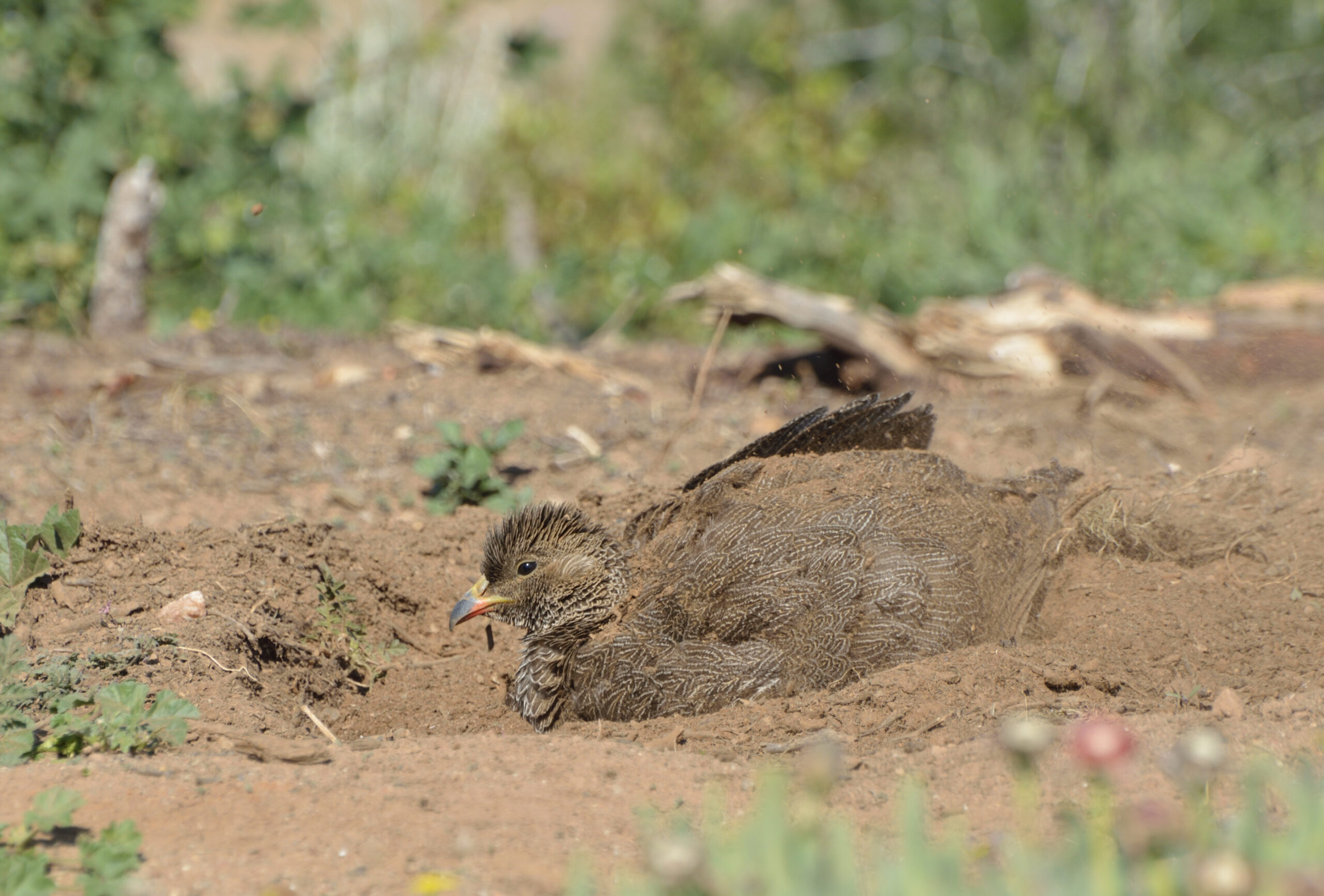
Cape Spurfowl will roost in a tree or bush at night to prevent predation. The males use the sharp spurs on their legs for fighting and to defend themselves from predators. The Cape Spurfowl loves taking dust baths to get rid of parasites and to keep their feathers in good condition. Quick running and short flights allow them to escape predators.
Poorer world without me
Spurfowls are a good indicator of dangers in the area. They will perch in trees and make alarm when there are any predators, such as snakes, in the area.
People and I
The Cape Spurfowl can become tame and will feed with chickens. People have hunted them for food.
Conservation status and what the future holds
Cape Spurfowl is listed as Least Concern by the IUCN. They are common in their distribution area in southern Africa and adapt well to altered environments.
RELATIVES
There are six species of spurfowl that belong to the genus, Pternistis. The Cape Spurfowl can be confused with the Natal Spurfowl (Pternistis natalensis), but their range do not overlap. The Natal Spurfowl is smaller, and they do not have the dark cap or pale cheeks. They also prefer different habitats, with the Natal Spurfowl preferring savanna and woodlands. The range of the Cape Spurfowl overlaps with the Red-necked Spurfowl (Pternistis afer), but they lack the red throat, bare facial skin and a red bill.
References and further reading
- Carnaby, T. 2008. Beat about the bush birds. Jacana Media, Johannesburg.
- IUCN. 2018. The IUCN Red List of Threatened Species. Version 2018-2. Available at: www.iucnredlist.org. (Accessed: 15 November 2018).
- Oberprieler, U. & Cillié, B. 2008. Die voëlgids van Suider-Afrika. Lapa Uitgewers, Pretoria.
- Reynolds, C. & Tye, N., 2015. 300 Maklike sigbare voëls in Suider-Afrika. Struik Nature, Kaapstad.
- Sinclair, I., Hockey, P., Tarboton, W. & Ryan, P. 2011. Sasol birds of southern Africa. Struik Nature, Cape Town.
- McGowan, P.J.K., Kirwan, G.M. & Boesman, P.F.D., 2021. Cape Spurfowl (Pternistis capensis), version 1.1. In Birds of the World. Cornell Lab of Ornithology, Ithaca, NY, USA. https://doi.org/10.2173/bow.capfra2.01.1
- Van Niekerk, H. & Kidson, S. 2023. Birds of South Africa. Briza, Pretoria.
Author: Lize Labuscagne
E-mail: L.Labuscagne@sanbi.org.za