
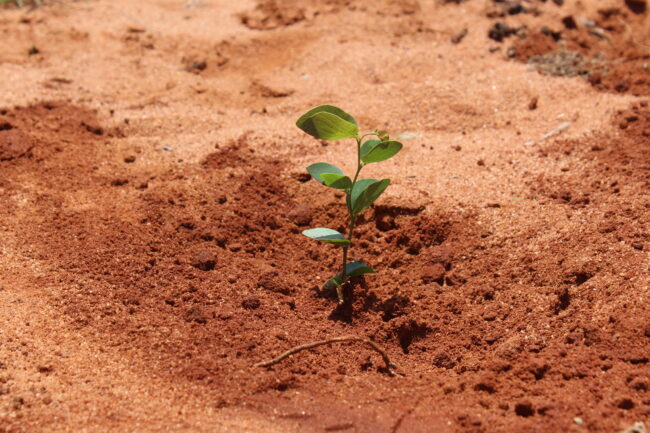
Colophospermum mopane (Mopane tree) is an ecologically important tree throughout South Africa. The tree plays an important role in sustaining local ecosystems, wildlife, and surrounding communities. Its extensive root system prevents soil erosion, while its timber provides essential shelter and firewood for rural livelihoods. Additionally, the tree hosts mopane worms, protein-rich caterpillars that serve as a critical food source for humans and wildlife.
The mopane tree is highly valued for its firewood, and demand for it has increased significantly, extending beyond Limpopo Province to other provinces in South Africa. The firewood is valued for producing a lot of heat, burning slowly to produce lasting coals, and being durable because it resists termite damage, making it ideal for household cooking.
Because of its many uses, it faces severe overharvesting in areas where it is most abundant. Unsustainable firewood collection degrades local ecosystems and accelerates environmental vulnerability, diminishing vital food and shelter resources for livelihoods. As a result, communities are left exposed to strong winds and severe rainfall. It is disheartening to see mopane firewood piled on street corners, in yards, and at braai areas, reflecting the scale of exploitation.
Where did people lose the understanding of collecting firewood only from dead trees? Where did people lose the wisdom to preserve what has sustained them and their ancestors for future generations? Where did people lose the principle of taking only what they need and leaving enough for others? Where did people lose the commitment to comply with legislation and environmental laws? And finally, where did people lose their conscience?
With all the challenges associated with the Mopane tree, the Thohoyandou National Botanical Garden, under the South African National Biodiversity Institute (SANBI), has initiated a rehabilitation programme for Colophospermum mopane, commonly known as the Mopane tree, in partnership with Chief Munzhelele and the local community members in Tshenzhelani village. Additional key stakeholders include the Limpopo Department of Economic Development, Environment and Tourism (LEDET), which provides the legislative framework and regulatory guidelines essential to the initiative’s success.
We chose Tshenzhelani village to rehabilitate the Mopane tree because we had heard that the Chief had tried to stop, or rather warn, the community against over-harvesting the tree. With this intervention came many threats to the Chief, as people did not understand why they should be stopped from harvesting the tree, which produces good firewood for their households. The Chief then began working with the protection services and the soldiers (SANDF) in his area to limit over-harvesting of the trees.
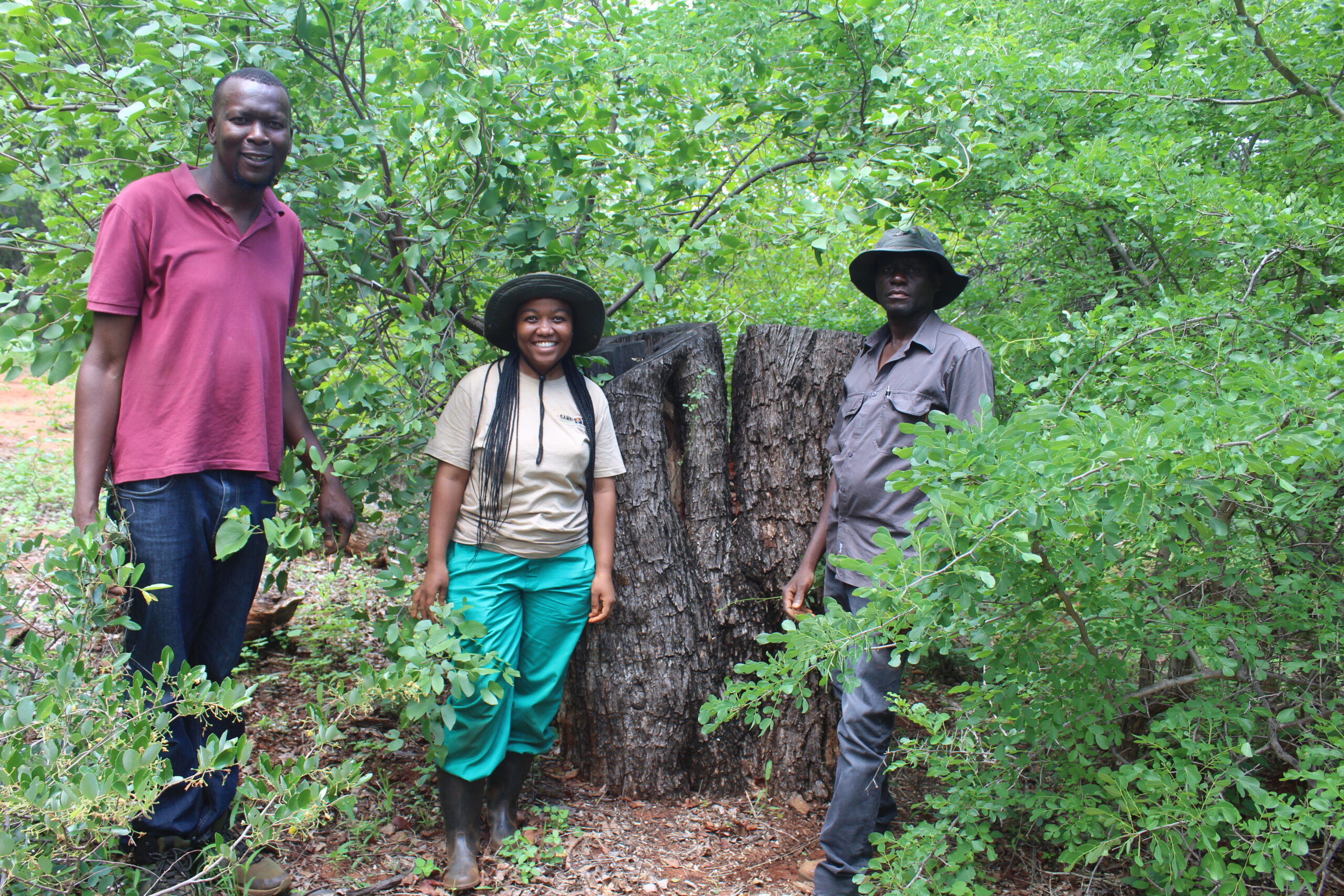
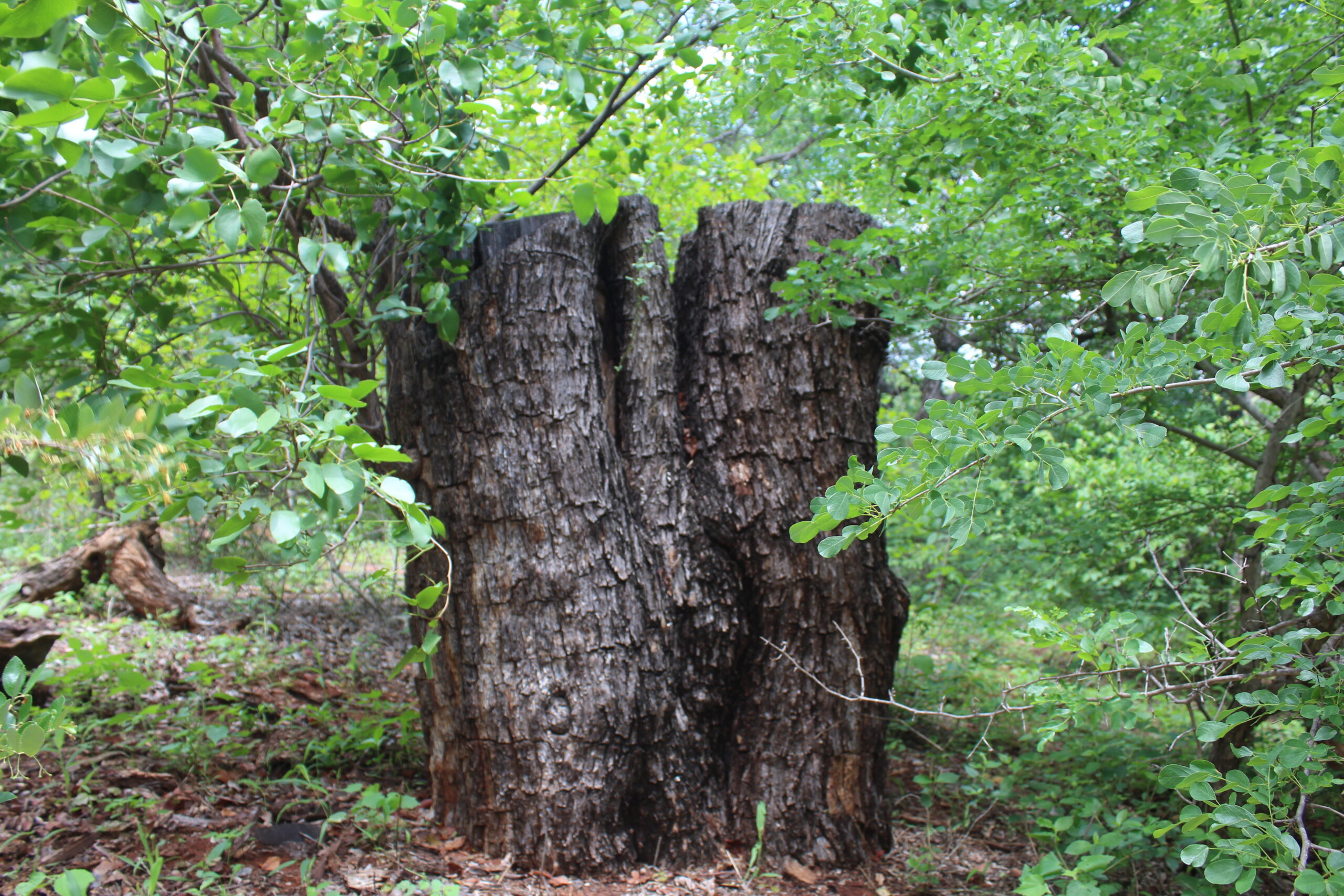
Though Chief Munzhelele has managed the threat of over-harvesting of the Mopane firewood, damage in one area had taken place, with huge trees cut down by chainsaw. Despite interventions to stop illegal harvesting, the area where the trees were cut down remains visibly scarred, and the sight of the damaged trees is deeply distressing. We are very grateful to see that there are people such as Chief Munzhelele who are preserving our flora for future generations. We call everyone to go ‘Green’. For there is no planet B; this means that everyone should play a role to ensure that we have a sustainable environment.
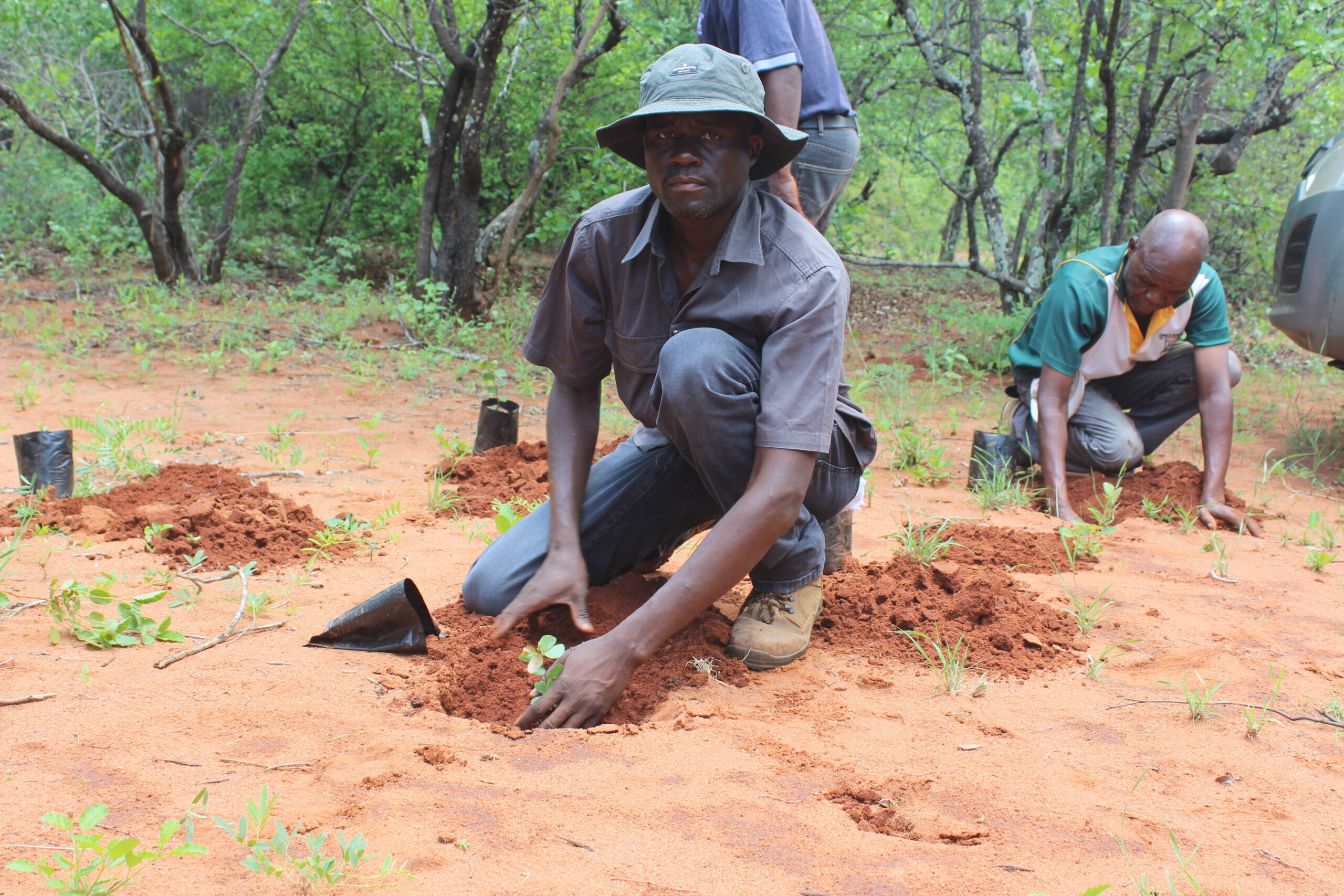
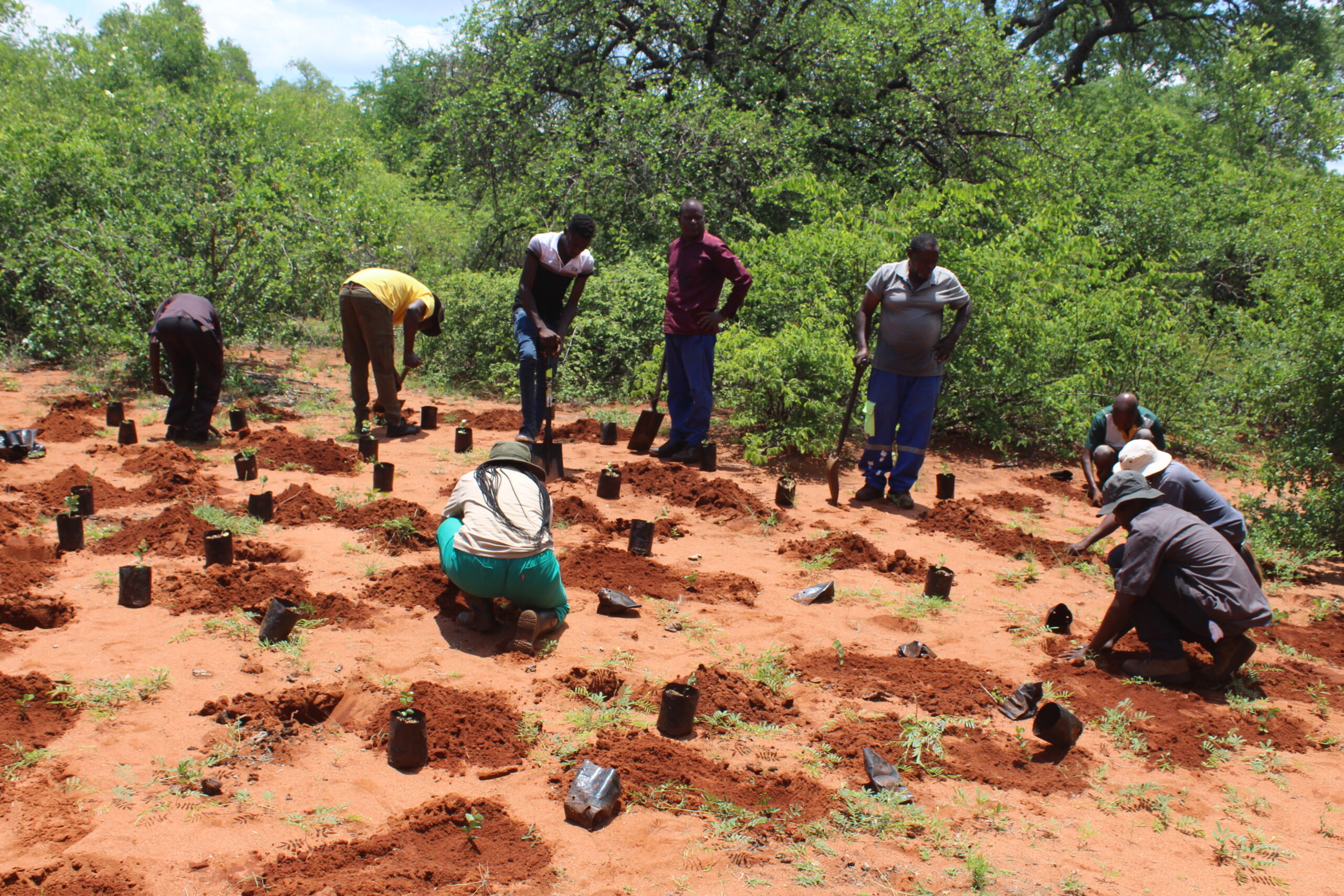
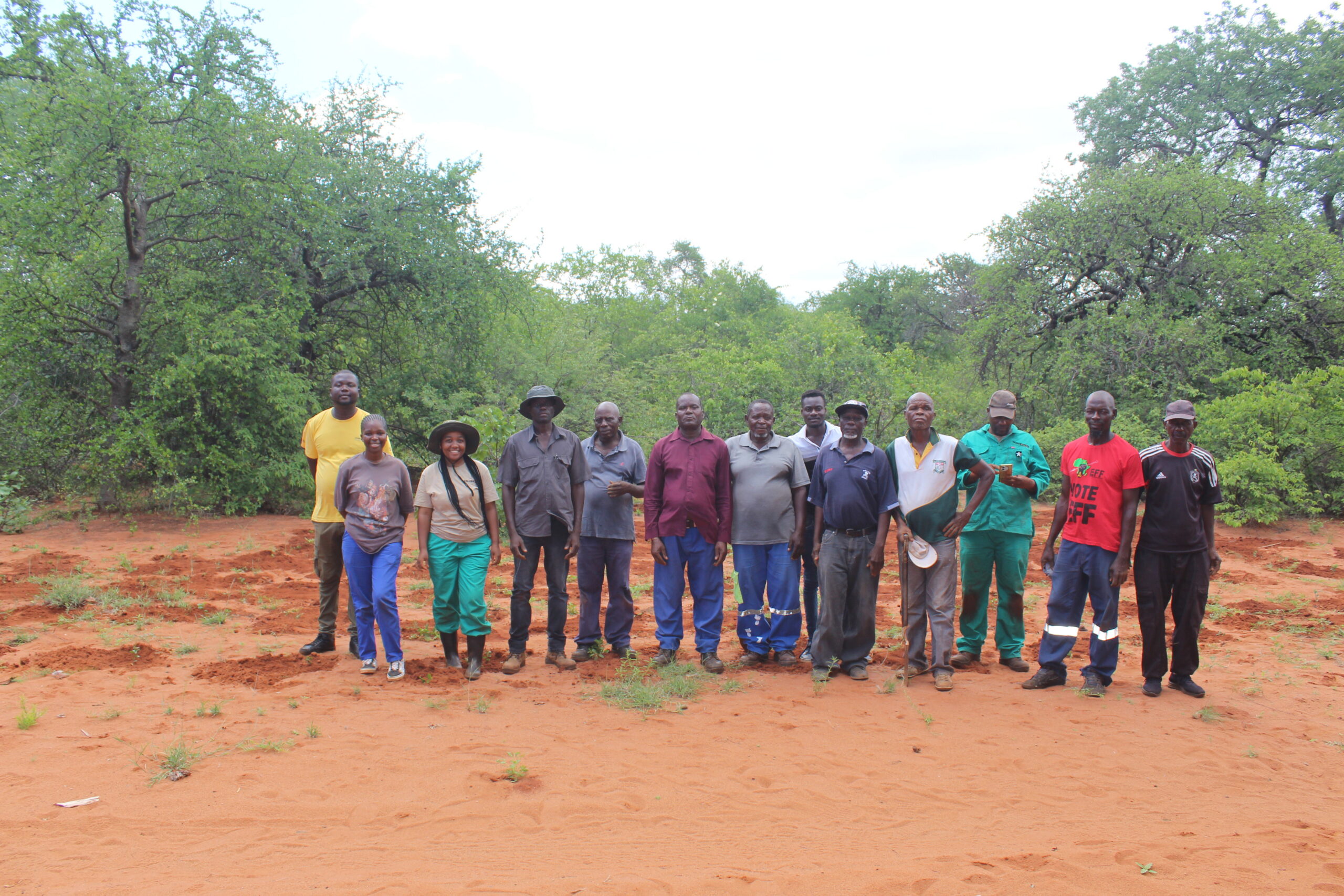
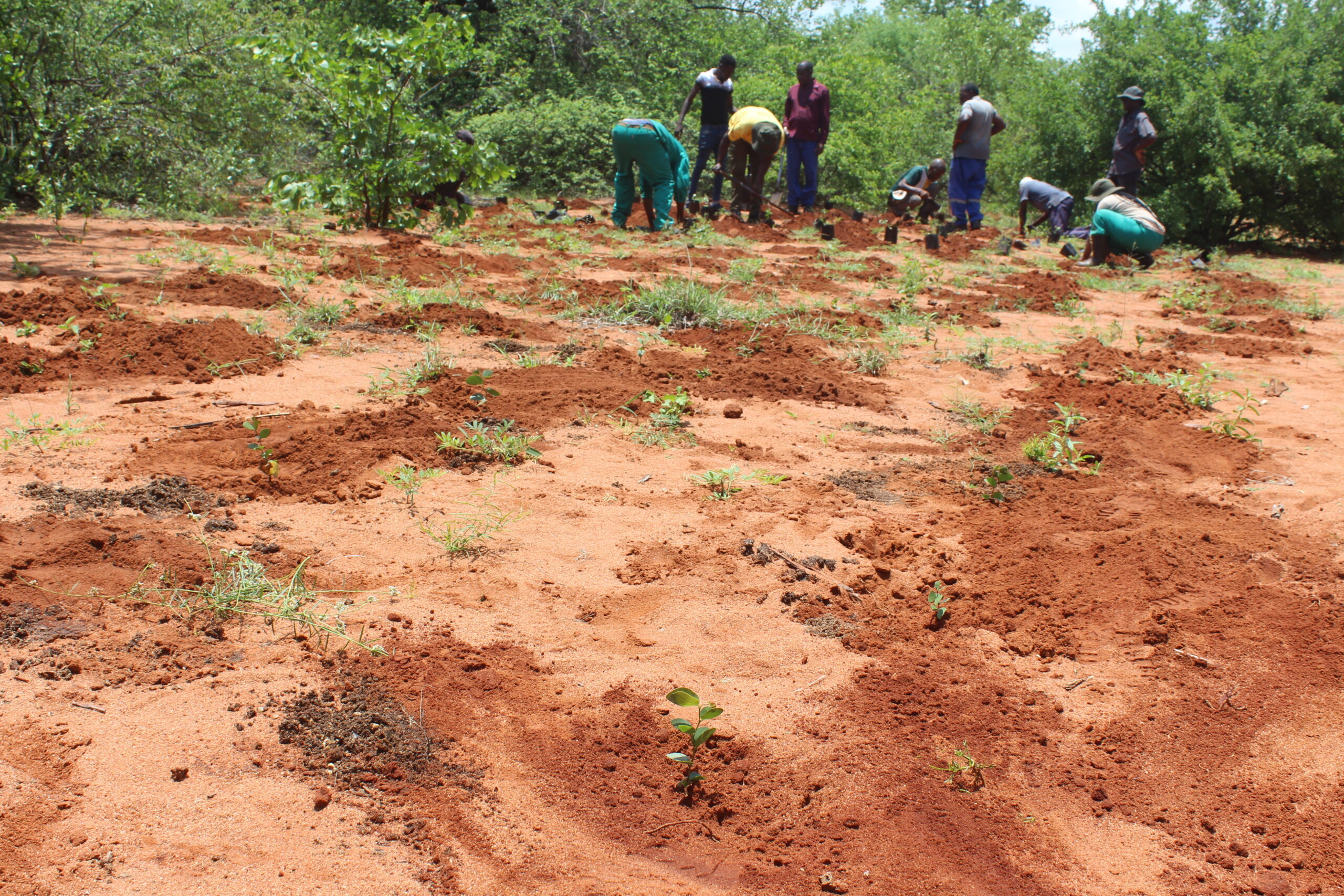
The planting commenced on the 3rd of December 2025, when we planted 300 Mopane trees alongside local members of Tshenzhelani village and their Chief. This initiative marks the beginning of the mandate to restore and promote indigenous plants in the area. The Tshenzhelani community, young and old, participated enthusiastically, with all hands on deck. There was visible excitement and pride in witnessing the rehabilitation of the Mopane tree. One elderly man remarked, “This is the beginning of more mopane worms.” For generations, mopane worms have been an important source of food for the community, sustaining livelihoods and contributing to food security for many decades.
We believe and hope that this programme will open people’s eyes to the negative impact of illegal tree poaching on the environment and livelihoods. People are also encouraged to plant this tree in their yards to contribute to the restoration effort. This will help, as they will be cutting trees from their yards instead of disturbing the natural habitat.
One could argue that it is time for local communities to start growing and planting species from which they derive direct benefits. For example, instead of planting palm trees, communities could plant indigenous or useful tree species that can provide firewood when needed in future. Similarly, rather than planting ornamental species such as Duranta ‘Sheena’s Gold’, communities could cultivate vegetables or medicinal plants that not only produce attractive leaves or flowers but also provide food or medicine when required. These are important questions that we should begin to ask ourselves.
To reinforce the importance of environmental protection and sustainability, we found it meaningful to include the following 15 inspirational quotes shared by EcoMENA, which echo strong messages of conservation, responsibility, and collective action:
- “We won’t have a society if we destroy the environment.” – Margaret Mead
- “The environment is no one’s property to destroy; it’s everyone’s responsibility to protect.” – Mohith Agadi
- “We don’t have to sacrifice a strong economy for a healthy environment.” – Dennis Weaver
- “A nation that destroys its soils destroys itself. Forests are the lungs of our land, purifying the air and giving fresh strength to our people.” – Franklin D. Roosevelt
- “What is the use of a house if you haven’t got a tolerable planet to put it on?” – Henry David Thoreau
- “Saving our planet, lifting people out of poverty, advancing economic growth… these are one and the same fight.” – Ban Ki-moon
- “If all mankind were to disappear, the world would regenerate. If insects were to vanish, the environment would collapse into chaos.” – E. O. Wilson
- “What we are doing to the forests of the world is but a mirror reflection of what we are doing to ourselves and to one another.” – Chris Maser
- “Our planet’s alarm is going off, and it is time to wake up and take action!” – Leonardo DiCaprio
- “To waste and destroy our natural resources will result in undermining the prosperity of our children.” – Theodore Roosevelt
- “Sooner or later, we will have to recognise that the Earth has rights, too.” – Evo Morales
- “Earth provides enough to satisfy every man’s needs, but not every man’s greed.” – Mahatma Gandhi
- “It is horrifying that we have to fight our own government to save the environment.” – Ansel Adams
- “It’s all of our responsibility to leave this planet in better shape for future generations than we found it.” – Mike Huckabee
- “The only way forward, if we are going to improve the quality of the environment, is to get everybody involved.” – Richard Rogers
Authors:
- Tshireletso Moloto (Horticultural Conservation Worker 2), Thohoyandou National Botanical Garden
- Mashudu Nndanduleni (Senior Horticulturist 2), Thohoyandou National Botanical Garden
- Phisto Shoroma (Environmental Education Officer), Biodiversity Education and Public Engagement)