
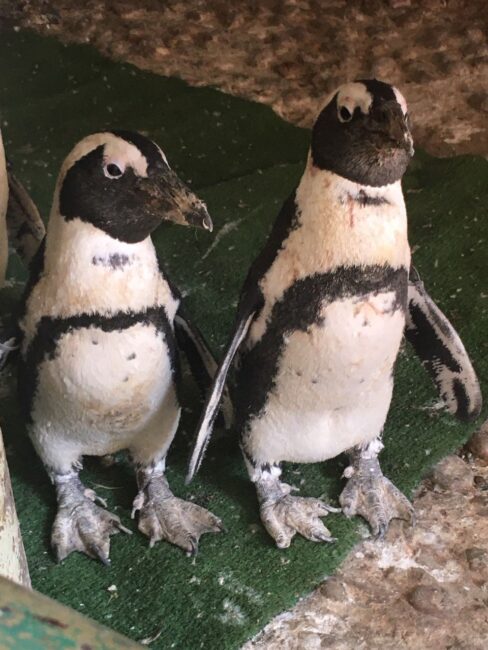
This International African Penguin Awareness Day, the National Zoological Garden (NZG) is celebrating new life in its African penguin colony while highlighting the urgent need to protect this Critically Endangered species in the wild.
Observed on Saturday, 10 October 2026, this year’s African Penguin Awareness Day is being marked under the #NotOnOurWatch theme, a call to action to protect African penguins and prevent further declines in their wild populations. The NZG is currently home to 14 African penguins and is celebrating the arrival of four chicks as the colony begins breeding again.
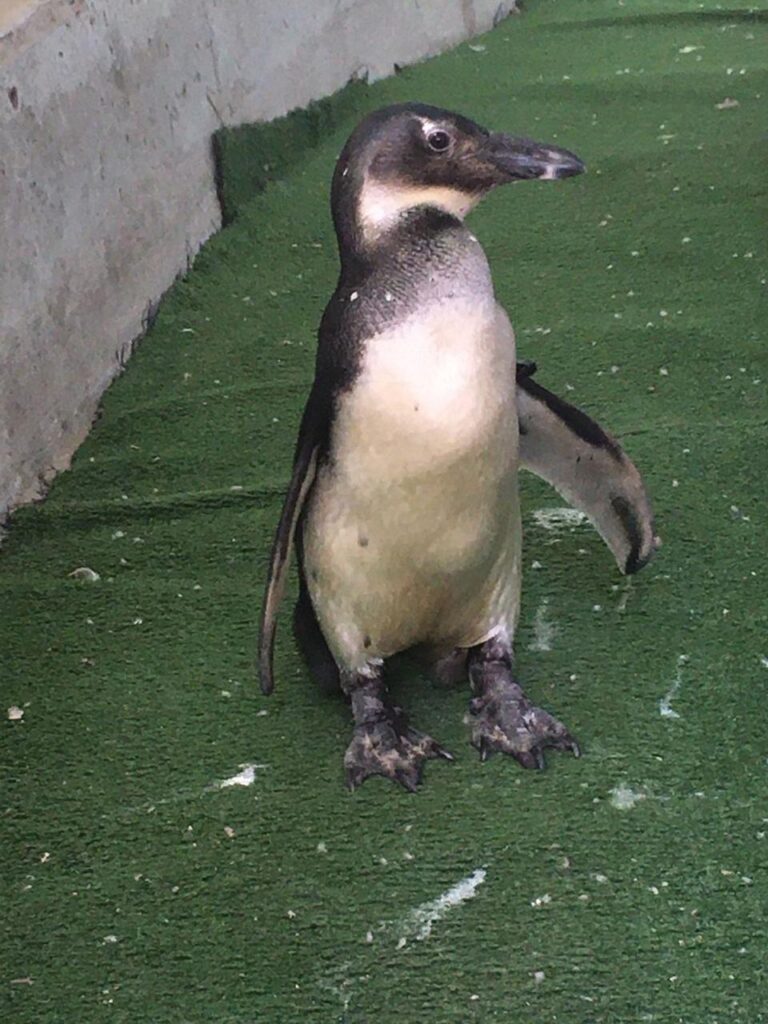
One of the chicks has started venturing out of its nest and is beginning to look different from the adults. African penguin chicks grow blue-grey juvenile plumage 20-30 days after and are often referred to as baby blues or “blues”. They develop their distinctive black-and-white adult plumage after their first major moult. The other three chicks remain in their nests and are still too small to be seen by visitors. There is more good news in the colony. Another breeding pair laid two eggs last week, with an incubation period of approximately 38–42 days. Both parents share responsibility for incubating the eggs and raising their chicks.
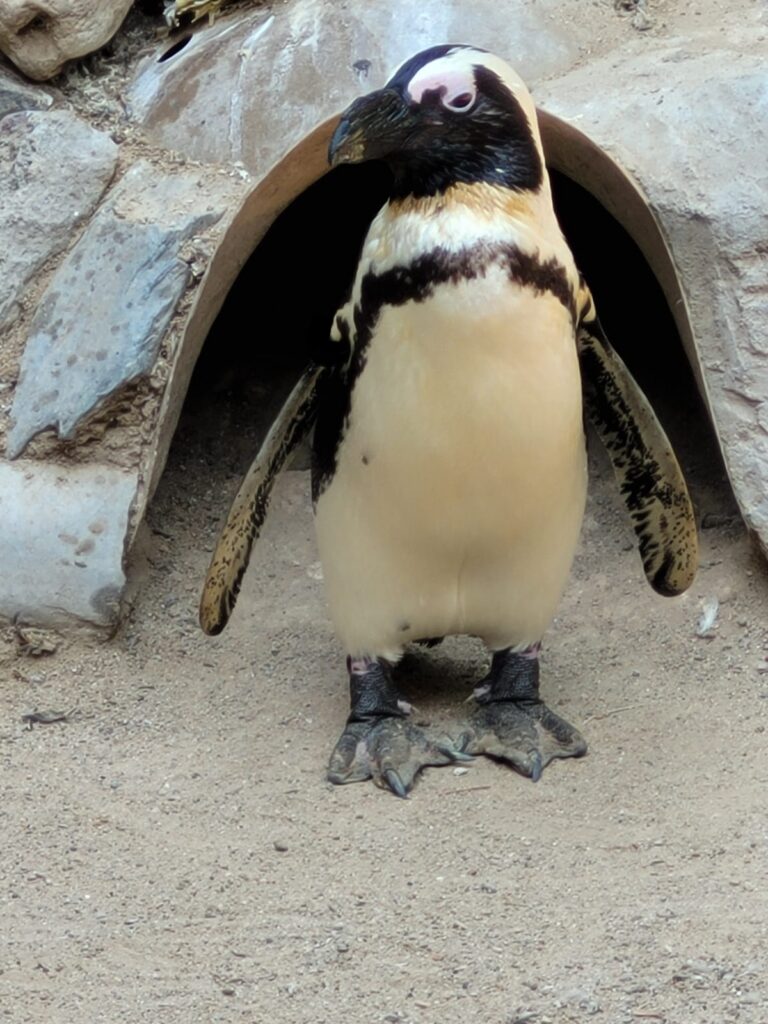
The NZG’s work with its African penguins extends beyond breeding. Each penguin is individually identified using a coloured tag attached to its flipper. Males are tagged on the right flipper and females on the left, allowing keepers to identify individuals and monitor the birds as a colony. The penguins are hand-fed three times a day and eat pilchards, with additional vitamins added to their food.
Contrary to popular belief, African penguins do not snow or freezing temperatures to thrive. In fact, they are native to the coastal waters of southern Africa and are well adapted to a warmer climate, hence, the NZG provides heat lamps to help ensure their continued comfort and well-being.
African penguins (Spheniscus demersus) are flightless seabirds highly adapted to life in the ocean. However, their numbers in the wild have declined dramatically due to pressures including competition for food with commercial fisheries, habitat degradation, pollution and oil spills, and climate-related impacts. As a result, the species is classified as Critically Endangered on the IUCN Red List, with fewer than 10,000 breeding pairs remaining in South Africa.
Protecting African penguins is not only about what happens along the coast. The NZG is in Pretoria, far from the ocean, but what happens inland can eventually reach marine ecosystems. For example, litter thrown into a river can be carried downstream into other waterways and ultimately towards the ocean. A piece of waste discarded inland can therefore become a threat to wildlife much further away.
“Although we live inland and may feel far removed from the ocean, we still have a responsibility to protect it. What we do here matters. Something as simple as throwing litter into a river can have consequences far beyond where we live. We all have a part to play, so please do not litter,” says Elsie Bavarian Briedenhann, Conservation Officer and Trainer: Fur Seals and Penguins at the NZG. Everyone can play a role by keeping litter out of rivers and stormwater drains, reducing unnecessary single-use plastics, disposing of waste responsibly and taking part in local clean-up initiatives.
From Friday, 9 October, public visitors and school groups will have an opportunity to see the NZG’s African penguin colony and learn more about these remarkable birds. On Saturday, 10 October, the NZG will mark African Penguin Awareness Day with an animal talk, games and enrichment activities, as well as an opportunity for visitors to see the penguins being fed.
The youngest chicks will remain in their nests and out of public view, but visitors may be lucky enough to see the older chick as it begins exploring outside the nest.
This African Penguin Awareness Day, the NZG invites the public to learn more about these remarkable birds and consider how everyday actions can help protect the ecosystems they depend on.
Enquiries:
Ednah Sekwakwa
Manager: Marketing and Communications
E-mail: e.sekwakwa@sanbi.org.za
Tel: 078 617 5202