

Pollution is putting more pressure on South Africa’s rivers, wetlands, estuaries, groundwater and marine ecosystems. Findings from the National Biodiversity Assessment (NBA) 2025, being launched on 9 December 2025, highlight that the pollution assimilation capacity of our aquatic ecosystems is being exceeded. This affects nature, people and the economy.
Healthy aquatic ecosystems are essential for clean drinking water, farming, fishing, tourism, jobs and many other benefits. But many of South Africa’s rivers, wetlands and estuaries are already struggling. Pollution is building up faster than these systems can clean themselves, and water quality is becoming worse in several areas across the country. Freshwater-dependent species such as freshwater fishes and waterbirds are among the most impacted groups when considering population. With observed declines in wetland habitat where some of these species’ forage, causing local population declines.
A wide mix of pollutants is causing this decline. These include plastics, pesticides, untreated or poorly treated sewage, dirty stormwater from towns and cities, and waste from farms and industries. New types of pollution are also becoming a concern, such as microplastics, medicines that wash into rivers, chemicals used in household and industrial products, and old pesticides like DDT – the latter has been found in places like Lake Sibaya, coral reefs and submarine canyons.
Pollution enters water from many sources — leaking sewage pipes, overloaded wastewater plants, run-off from farms and factories, and litter dumped in rural and urban areas. Besides decreasing water quality for drinking and industrial use, pollution can also cause algal blooms, low oxygen, fish kills and the spread of invasive water plants. This disrupts the natural balance of rivers, wetlands and coastal systems. As a result, there is less clean water available for households, food production and other economic activities.
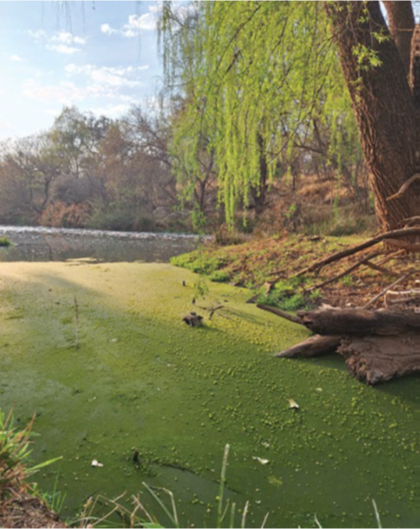
South Africa’s aquatic systems face multiple forms of pollution, including from plastics, pesticides, untreated wastewater, urban runoff and more. Their capacity to assimilate pollutants is being exceeded with consequences for biodiversity, health and economic development. This eutrophication is from sewage spillage into the river. (© Hlengiwe Mtshali)
These impacts are not felt equally. Communities who depend directly on natural rivers and streams – often rural and vulnerable groups – are affected the most. Pollutants can build up in fish and other animals, creating risks for both wildlife and people.
South Africa has strong laws and policies to protect water, but they need stronger enforcement and better implementation. Recent progress includes:
- National Water Resource Strategy III (2023)
- South African Water Quality Guidelines for Coastal Marine Waters (2022)
- Marine Pollution (Prevention of Pollution from Ships) Amendment Bill (2025)
These tools set the right direction, but now they must be supported with funding, action and stronger cooperation across sectors.
Positive steps are already underway
Despite the challenges, there is real hope. Across the country, many groups are working to turn things around. Government departments, researchers, NGOs and communities are restoring rivers, fixing wetlands, improving waste management and raising awareness about water pollution.
Wastewater treatment plants are being upgraded. Cities are testing new ways to manage stormwater. Catchment forums and community groups are removing litter, reporting pollution incidents and helping monitor water quality. Local clean-up campaigns and citizen science projects show that ordinary people can make a big difference when they work together.
Working together for cleaner water
Water pollution affects everyone — our health, our food, our jobs and our environment. Solving it requires teamwork and commitment from all parts of society. The encouraging progress already underway shows that recovery is possible.
With continued action and strong partnerships, South Africa can restore its rivers, wetlands and coastal systems, protect the species that depend on them, and secure healthy water resources for future generations.
From 9 December 2025, you will be able to explore the full NBA 2025 results and dive deeper into South Africa’s biodiversity.
Visit: http://nba.sanbi.org.za/