

By Ropafadzoyashe Tsiga – WIL Student; Mashudu Nndanduleni – Senior Horticulturist
In the heart of Limpopo, Thohoyandou National Botanical Garden demonstrates an environmentally friendly and cost-effective way of producing compost using only two natural ingredients, such as fallen leaves, grass clipping and rainwater. Since there is no access to a water pipe at the composting site, the garden relies entirely on seasonal rainfall to support the process of decomposition. This practice shows how we can make the most of local resources in the garden to create rich, organic matter that feeds the plants in the garden and helps cut down on waste. This practice adds value to the development of the garden, providing the eco-friendly organic matter that sustains the garden for the future.
Compost materials and collection
Dry leaves, which are abundant throughout the garden, are used as the primary material in the composting process. The garden is covered by the canopy of t deciduous, semi-deciduous and evergreen trees – supplemented by the shrubs and lawn clipping- which all contribute to the leaf supply. On most Tuesdays and Fridays, the garden workers gather raked leaves from various parts of the garden, load them into a tractor and transport them to a central composting area. These leaves are carbon-rich and serve as a perfect foundation for composting.

Figure 2: Staff sieving the compost.
As the compost site does not have piped water, rainwater is used to moisten the leaf piles. This natural moisture is crucial for the microorganisms that break down plant matter. Although other green organic materials can speed up decomposition by adding nitrogen, the current method uses leaves alone, forming what is known as a cold composting system. However, we do collect the green leaves that have fallen naturally, which add nitrogen and improve decomposition.
Other garden debris, especially weeds and infested materials, are disposed of separately, as our composting method does not always reach the standard temperature (55-70 0C) required to destroy weed seeds and plant pathogens. This careful selection ensures our compost is free of weeds and rich in soft organic matter.
Most of the leaves are collected in autumn and winter when leaf fall is at its peak. Staff have responded positively to this initiative, and piles are stored until the rainy season begins, when natural moisture kickstarts the breakdown process.

Figure 3: Sieved compost, ready for use.
The composting process
After the leaves are brought to the compost site, the organic matter is stacked into a meter-high heap. Each heap is covered with a light grass clipping to reduce the moisture loss and let nature take its course. When it rains, the piles soak up the water, which helps kickstart the tiny microbes that break the plant material down. These microorganisms differ in size, such as earthworms and woodlice, which are easily visible, but most are generally too small to see with the naked eye, such as beneficial bacteria and fungi. If the compost gets too dry, the process slows down, but if it’s too wet, it can turn smelly and lose its fresh, earthy scent. The compost at Thohoyandou NBG generally breaks down and is turned during the rainy season as rain plays a big role in the process of creating moisture for the compost heap.
To keep the air flowing and speed the breaking down process, the piles are turned once monthly so that the microbes get the oxygen they need and the compost breaks down evenly. Usually, we do this every month, but depending on the rain and how fast the material is decomposing. Turning the piles by hand also stops the leaves from getting too compact and increases the break-down of organic matter. Thohoyandou receives about 752mm of rainfall annually, which most of it receives during the summer months. This natural rainfall is a major factor in the success of our composting. After turning the piles, the most broken-down material is placed on top, helping to retain moisture while still allowing oxygen to penetrate the heap.
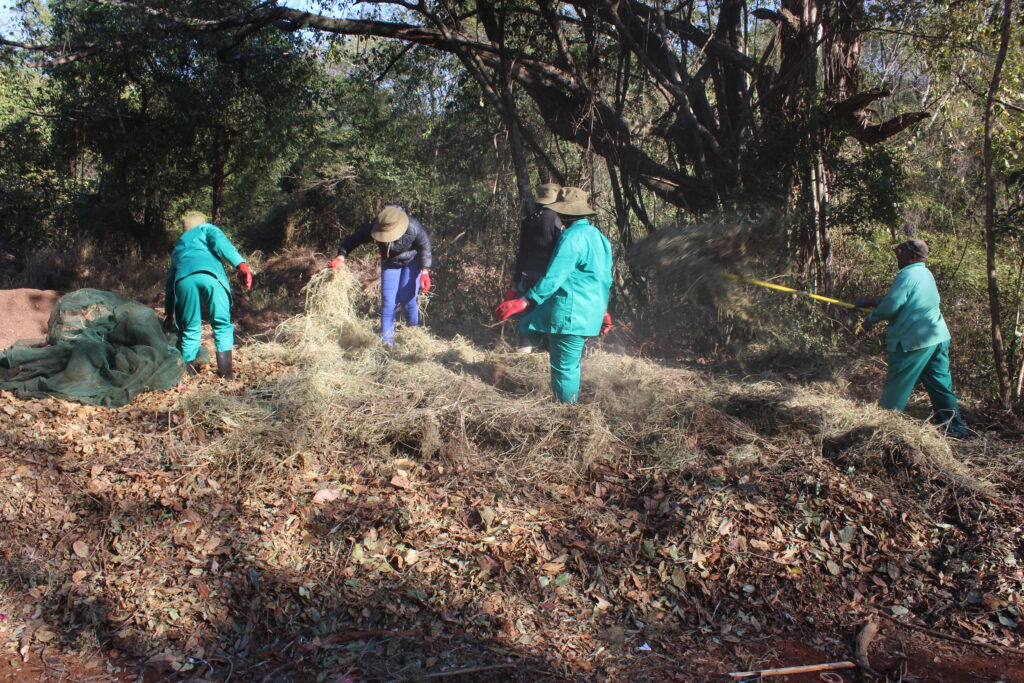
Figure 4: Placing the top layer of grass over leaves during compost preparation.
Maturation and sifting
After several months, the leaf piles turn into dark, crumbly compost with a rich, earthy smell. The decomposed organic materials are loosened and ready to enrich the soil. When it’s ready, we sift it to remove any large or undecomposed bits. The material sieved gives a uniformity when applied especially in pot plants. This process is currently when the rainfall has dropped to allow the light moisture on the decomposed compost to be filtered easily. The staff will move the sieve to the compost heap and support it with a wooden pole to stand at a 90% angle that will allow the flow of course organics material while allowing the decomposed material to go through the sieve. The undecomposed organic matters are taken back to the pile and begins the process. Any contaminants, such as small plastic or stones that got in the process, are removed and discarded. The fine compost is then spread throughout the cultivated flowerbeds, where it boosts soil fertility, helps the ground hold moisture, and supports strong, healthy plant growth. Some of the composts are used in the nursery for propagation mixes. In this way, our living collection truly gains life from compost made on the site.
Undecomposed fragments captured during sifting are returned to the compost pile to continue breaking down and support the next composting cycle. This process adds life and excitement to gardening by completing the production cycle, returning nutrients to the soil and allowing the same plant that supplied the compost material to benefit from it again.

Figure 5: Wet compost in the nursery, to be mixed with sand to create a nutrient-rich and well-drained growing medium.
Environmental benefits
This natural composting system provides a wide range of environmental and practical benefits:
- Improves soil health, structure and nutrient content.
- Reduces organic waste going to landfills.
- Supports biodiversity by creating rich soils for indigenous plants.
- Saves water by relying only on rainfall instead of municipal water.
- Improve the moisture retention.
- Promotes sustainability by utilising materials readily available on site.
The practice also serves as a learning opportunity for visitors and community members who wish to replicate natural composting methods at home or in schools and community gardens – proving that you can start with the resources you have to benefit the environment.
Application of compost in the garden and nursery
When compost is taken to the garden or nursery for use, it is sometimes slightly dry, as it is often applied during the spring season, regardless of whether there has been rain. If the compost becomes too dry, many microorganisms may temporarily disappear. However, once the compost is applied to the soil, microorganisms naturally return. Together with those that remain, they continue breaking down organic matter in the soil around the plants, releasing additional nutrients.
In the nursery, this compost serves as an excellent booster for the living collection. When plants are watered, nutrients are gradually released into the soil, allowing plants to respond positively. This has proven to be a cost-effective, safe, and environmentally friendly practice that can be applied not only in home gardens but also in public and community spaces.
The choice of organic material used for composting is especially important, particularly when the composting process does not reach high temperatures. Proper selection helps reduce weed growth, improve soil moisture retention, and enhance plant nutrition.
When applied, compost is generally spread in layers of 3–5 cm, depending on the size of the pot, plastic bag, flowerbed, or open planting space.
The response of the plants in the garden and nursery
Over the past few years, plants have shown a positive response when compost is applied during spring and mid-summer. Almost all plants, excluding succulents, are directly fed with compost. Seedlings are given a period of six weeks after being potted up before compost application. This pattern allows seedlings and cuttings to establish properly and prevents damage during compost application.
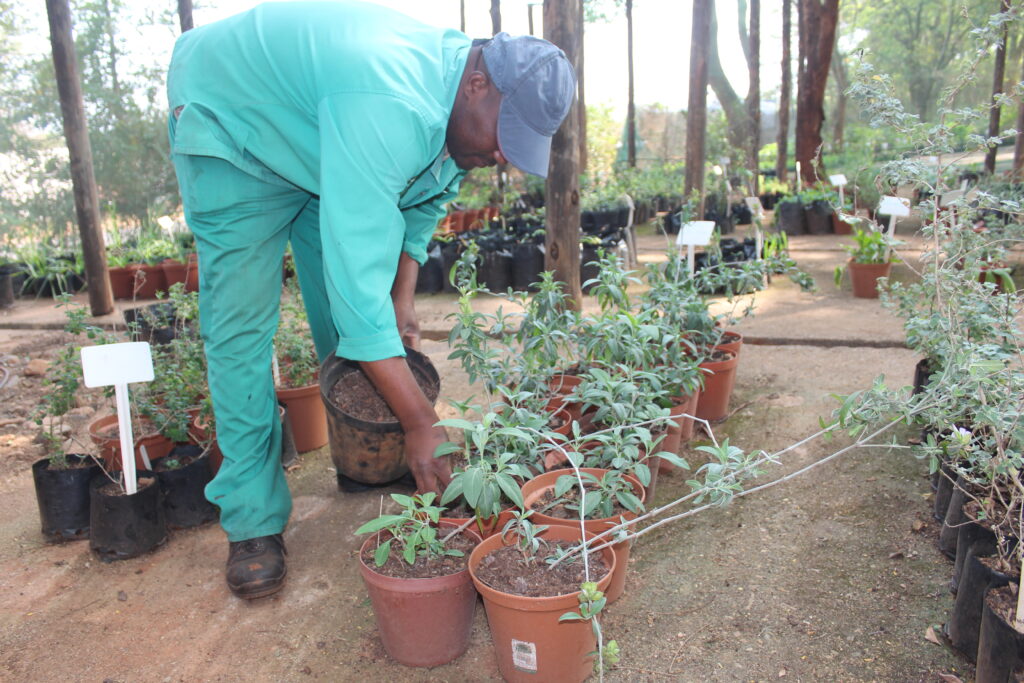
Figure 6: Rofhiwa Netshituni feeding Barleria lanceolata in the nursery.
Conclusion
The natural composting process at Thohoyandou National Botanical Garden is a prime example of how simple methods can have a big impact on sustainability. By using fallen leaves and rainwater alone, the garden produces a valuable organic product that supports plant health, reduces waste, and respects the natural rhythms of the environment. It is a low-cost, high-impact method that aligns with ecological principles and can inspire others across Limpopo and beyond. Currently, the garden is also conducting a research experiment to compare the quality of its compost – particularly in terms of weed content and plant response – with compost produced in other network gardens. This will provide useful insights into the effectiveness of the method and its potential for broader application.
References
- Food & Trees for Africa. 2025. How to compost. https://trees.org.za/how-to-compost/
- Zaborski E.D. 2010. Composting to Reduce Weed Seeds and Plant Pathogens. eOrganic. https://eorganic.org/node/4751
- Random Harvest. 2025. How to make great compost for your garden. https://www.randomharvest.co.za/News-Blog/Random-Harvest-News-Blog/entryid/160/how-to-make-great-compost-for-your-garden
- The Gardener. Composting Basics. https://www.thegardener.co.za
- Blackwood’s Home of Gardening. 2024. Composting Guide. https://www.blackwoods.co.za/composting/
- South El Monte Hydroponics. How to compost leaves the right way. https://southelmontehydroponics.com