
Executing Entity to co-develop and lead the 'Upscaling and Enhancing the Locally-led Adaptation Small Grants Facility for South Africa (Phase 1) project'.
Summary
The South African National Biodiversity Institute (SANBI) is South Africa’s National Implementing Entity (NIE) of the Adaptation Fund, and a Direct Access Entity (DAE) of the Green Climate Fund. In this capacity, SANBI is able to co-develop project proposals with stakeholders for submission to the Adaptation Fund and Green Climate Fund.
One of the proposals that SANBI is currently developing is for a project that will be submitted to the Adaptation Fund, entitled “Upscaling and Enhancing the Locally-led Adaptation Small Grants Facility for South Africa”.
SANBI is seeking Expressions of Interest from appropriately qualified and experienced institutions who would like to play the role of Executing Entity, should the proposal be approved by the Adaptation Fund.
The selected Executing Entity will partner with SANBI to co-develop the full funding proposal, in consultation with national and sub-national stakeholders and with the support of a project development consultant, and support project implementation should the proposal be approved by the Adaptation Fund Board.
Background
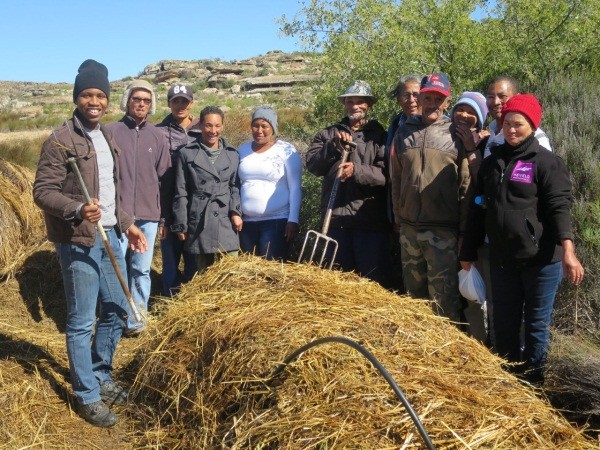
The “Taking Adaptation to the Ground: A Small Grants Facility for Enabling Local Level Responses to Climate Change” project (known as the Community Adaptation Small Grants Facility project or CA SGF), was launched in 2014 with support from the Adaptation Fund. It responded to the need for supporting climate change adaptation action at the local level. The CA SGF project was designed to empower community members to identify local level climate change adaptation responses themselves, and directly access climate finance for implementation. This approach enabled climate finance to flow directly to vulnerable groups, and provided an important complementary adaptation response to higher level systemic responses.
Additional information about the CA SGF can be accessed here.
SANBI has currently developed a Concept Note for aa USD 5 million proposal for enhancing and scaling up the CA SGF project with further grant support from the Adaptation Fund. The “Upscaling and Enhancing the Locally-led Adaptation Small Grants Facility for South Africa” proposal is being developed in two stages. The first stage culminated in the development of a Theory of Change and identification of the four District Municipalities where the project will take place, i.e. the Amathole, Thabo Mofutsanyana, uThukela, and Gert Sibande Districts Municipalities which led to the full Concept Note developed and submitted to the Adaptation Fund Board Secretariate for technical and consideration by the Board in April 2026.
The first stage proposal can be accessed here.
The second stage will support further local level consultation, additional technical and feasibility studies and detailed full proposal design Should the Concept Note be approved by the Adaptation Fund Board
It is hoped that the Fully-developed Proposal process will be concluded in end of 2026 . Thereafter, the Fully-developed Proposal will be submitted to the Adaptation Fund Board for consideration. It is hoped that project implementation will commence upon approval of the full proposal by the Adaptation Fund Board, which is anticipated to be in mid-2027.
Project overview
The “Upscaling and Enhancing the Locally-led Adaptation Small Grants Facility (Phase 1)” project’s goal is to mainstream locally-led climate adaptation response strategies into local practices and implement concrete adaptation projects to reduce the vulnerability of communities in targeted municipalities to the effects of climate change. This will be achieved by establishing a small grants facility (SGF) mechanism that provides resources to communities to protect assets, livelihoods and ecosystem services from climate change risks and impacts.
The project has three interrelated components: 1) Grant development & implementation capacity development 2) locally-led concrete adaptation activities, and 3) towards a Locally-led Adaptation grant facility.
The first component will strengthen the capacity of subnational government, grant-eligible institutions, and community partners to support, design, and implement locally led adaptation subprojects supported by the grant facility.
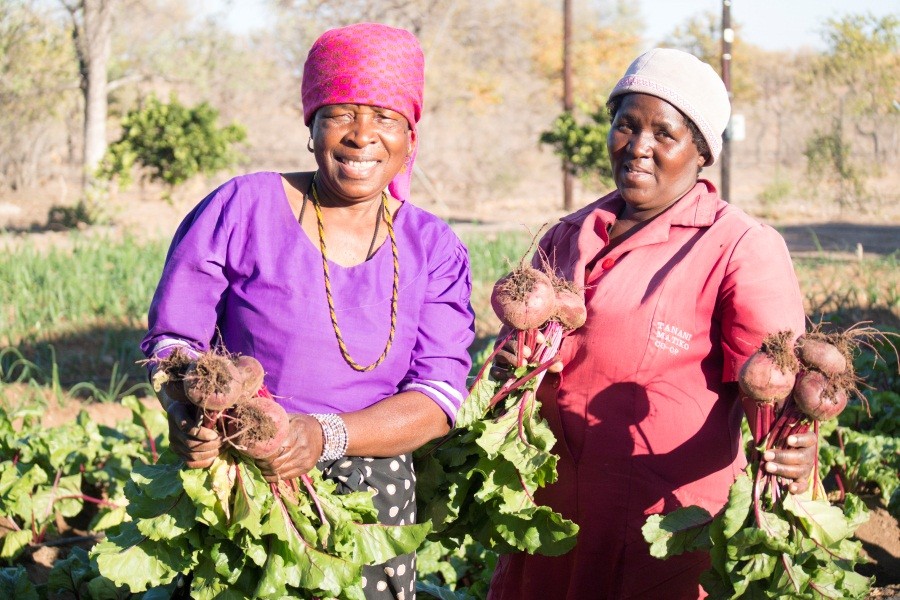
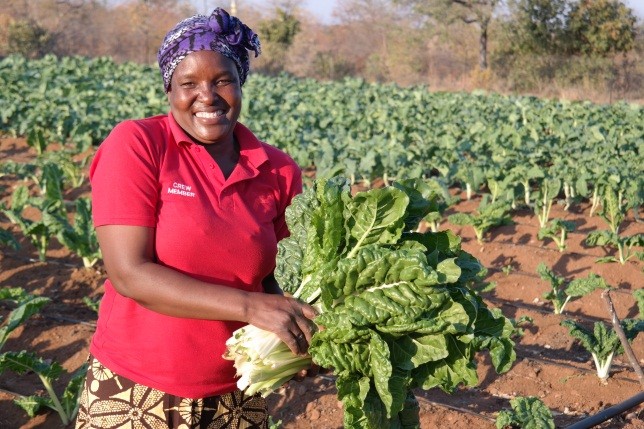
The second component will support local communities to implement sub-projects that enhance climate-sensitive livelihoods and protect built and natural infrastructure from climate change impacts. It will do so by awarding grants of different sizes, that support the adaptation responses that are proposed by these communities. All projects supported through the facility will need to deliver tangible outcomes informed by climate science, including local and indigenous knowledge systems, and be pro-poor and gender-just. Modality response options will be determined through technical and participatory vulnerability assessments, needs and asset assessments and response identification exercises conducted as part of anticipated modality inception processes.
The final project component will capture and disseminate the knowledge and lessons learned during the implementation of the “Upscaling and Enhancing the Locally-led Adaptation Small Grants Facility for South Africa” project (Phase 1) (including inter- and intra-district knowledge exchanges and case studies), undertake a baseline assessment and, through consultation with future donors and implementation partners, will develop a framework for an innovative, multi-donor Locally-led Adaptation grant facility at the national level.
The Concept Note is set out below and can be found here.
| Project Components | Expected Concrete Outputs | Expected Outcomes |
| Component 1: Grant development & implementation capacity development | 1.1.1 Local organisations supported to co-create and lead project development and implementation
1.2.1 Project communication and knowledge management plan implemented
1.2.2 Cross-district knowledge exchanges and case studies convened
|
1.1 Capacity of subnational government, grant-eligible institutions and community partners to support, design and implement LLA subprojects strengthened.
1.2 Knowledge and lessons learned in grant development & implementation captured and disseminated |
| Component 2: Locally led concrete adaptation activities | 2.1.1 Climate-resilient locally led adaptation sub-projects implemented | 2.1 Adaptive capacity in climate-sensitive development sectors and communities vulnerable to climate change enhanced and strengthened |
| Component 3:
Towards a locally-led adaptation grant facility |
3.1.1 Framework for an innovative national locally-led adaptation grant facility co-developed | 3.1 National locally-led adaptation grant facility framework established |
Table 1: Project design for the “Upscaling and Enhancing the Locally-led Adaptation Small Grants Facility for South Africa” project.
Implementation arrangements and scope of work
The project will be managed by an Executing Entity.
Project funds will flow from the Adaptation Fund to SANBI in its capacity as National Implementing Entity, and onwards to the Executing Entity and finally the grant recipients. Project governance will comprise local level task teams in each of the District Municipalities and a Project Steering Committee. This is illustrated in Figure 2.
Overall, the Executing Entity will play the role of Grant Intermediary and will also support the project facilitation function in each of the partner District Municipalities. While detailed roles and responsibilities for the Executing Entity will be determined and jointly agreed during the Fully-developed Proposal development process, the Executing Entity will be responsible for the following tasks, at minimum:
- Overall project monitoring, compliance, evaluation and reporting, and working directly with SANBI to ensure that AF reporting requirements are met;
- Receiving and disbursing funds, sub-contracting the project’s sub-executing entities and service providers, and contracting with all grant recipients. The nature and scope of work of the service providers will only be determined during detailed proposal development;
- Ensuring that the project produces the results specified in the project document to the required quality standard and within the specified time and cost constraints;
- Establishing the proposal development, grant management and reporting system for the project, ideally utilising existing tools;
- Setting up and maintaining the project’s governance systems, both centrally and at the level of the District Municipalities;
- Providing site-based support in each of the District Municipalities to support grant recipients to implement the project activities, including project identification, design and implementation, day-to-day operations of the project, and operational and financial management and reporting. This could include partnering with local organisations; and
- Designing and overseeing the implementation of a capacity building and knowledge management programme of work.
Figure 1: Proposed flow of funds and governance arrangements for the “Upscaling and Enhancing the Locally-led Adaptation Small Grants Facility for South Africa (Phase 1)’’ project.
Current call
SANBI is seeking Expressions of Interest from appropriately qualified and experienced institutions who would like to partner with it to co-develop the Full project Proposal, and play the role of the project’s Executing Entity should the proposal be approved by the Adaptation Fund. Involvement in the development of the Full project Proposal will be at the selected institution’s risk and will not be funded. However, implementation will be supported with grant funding from the Adaptation Fund should the proposal be approved by the Adaptation Fund Board. The detailed programme of work and associated budgets will be compiled during the proposal development process. The Executing Entity must be legally registered and/or have an operational office with staff based in South Africa.
Application process
Interested parties are invited to submit an Expression of Interest to SANBI. The Expression of Interest should include:
- A cover letter that sets out why the organisation is well placed to perform the role of Executing Entity for the “Upscaling and Enhancing the Locally-led Adaptation Small Grants Facility” project, and the international, national and sub-national relationships that could be leveraged to co-design and deliver the abovementioned scope of work. This should include existing relationships with government and with civil society that could support the execution of the project, notably in the target District Municipalities, and existing relationships with private sector and philanthropy donors.
- Company or institutional profile, which includes brief overview of the company/institution with an indication of relevant experience to the scope of work and roles. This should include examples of relevant projects/ interventions that illustrate the required experience and competencies for each of the following:
- Grant making at the local level, including years or experience and the value and nature of these grants
- Management of grants from donors, including years or experience and the value and nature of these grants
- Technical experience in locally led adaptation, including years or experience and nature (the role that the organisation played)of this experience
- Partnerships with both local communities and government, including in the Provinces and DMs where the project will focus
- Track record mobilising resources for local development and/ or locally led adaptation, including years or experience and the value and nature of this resource mobilisation
- Five examples of capacity building or knowledge management processes, tools or products that are relevant to the scope of work in terms of process and/ or content including climate change adaptation, gender and local/ indigenous knowledge.
- Three signed letters of reference which must include summaries of appropriate assignments underway or completed within the last five (5) years. (Reference letters should include but not be limited to company name, contact person, contact details, total value of the contract, contract duration, and a summary of the service provider’s performance during the assignment).
- Abbreviated Curricula Vitae (CVs) of key personnel who will be working on this project, indicating their relevant experience. These should be no more than 3 pages in length.
Please submit the Expression of interest to climatefunds@sanbi.org.za by 17h00 on Monday 1 June 2026.
SANBI will convene two online briefing sessions regarding this call, and interested parties are invited to attend. The sessions will take place on the following dates:
- Tuesday, 19 May 2026, from 14h00 to 15h00
- Tuesday, 26 May 2026, from 09h00 to 10h00
Please register your interest by emailing climatefunds@sanbi.org.za. Participation in the briefing sessions is NOT compulsory.
Please note that:
- SANBI reserves the right to reject any or all Expressions of Interest.
- SANBI retains the right to not select an Expression of Interest even if all requirements are met.
- SANBI reserves the right to withdraw or revise the selection of the Executing Entity in the event of misrepresentation or non-performance.
Evaluation criteria
Expressions of Interest will be assessed against the following criteria:
| Functionality Criteria
|
Scoring | Weighting
(%) |
| 1. Experience and technical expertise to manage community-based grant-making
Indicative Evidence: Project contracts, letters of award, independent external evaluations and reference letters
* Note: the evidence submitted must clearly show the number of years in managing community-based grant-funding.
Prior experience that is not substantiated by evidence will not be considered when scoring Expressions of Interest.
|
· More than 9 years of experience in the relevant to the scope of work. (5)
· 7 to 8 years of experience relevant to the scope of work. (4) · 5 to 6 years of experience in the relevant to the scope of work. (3) · 3 to 4 years of experience in the relevant to the scope of work. (2) · 1 to 2 years of experience in the relevant to the scope of work. (1) · 0 years of experience in the relevant to the scope of work. (0)
|
30 |
| 2. Prior experience receiving and managing donor funds
Indicative Evidence: Project contracts, letters of award, independent external evaluations, reference letters.
* Note: the evidence submitted must clearly show that the role performed was in an Executing Entity capacity, or equivalent.
Prior experience that is not substantiated by evidence will not be considered when scoring Expressions of Interest.
|
· More than 9 years of experience managing grants in excess of R50 million. (5)
· 7 to 8 years of experience managing grants in excess of R50 million. (4) · 5 to 6 years of experience managing grants in excess of R50 million. (3) · 3 to 4 years of experience managing grants in excess of R50 million. (2) · 1 to 2 years of experience managing grants in excess of R50 million. (1) · Nover cover letter or 0 years of experience in managing grants in excess of R50 million. (0)
|
20 |
| 3. Technical experience working with locally led adaptation
Indicative Evidence: Project contracts, letters of award, independent external evaluations, reference letters.
* Note: the evidence submitted must clearly show the number of years in technical experience locally led adaptation.
Prior experience that is not substantiated by evidence will not be considered when scoring Expressions of Interest
|
· More than 9 years of experience in the relevant to the scope of work. (5)
· 7 to 8 years of experience relevant to the scope of work. (4) · 5 to 6 years of experience in the relevant to the scope of work. (3) · 3 to 4 years of experience in the relevant to the scope of work. (2) · 1 to 2 years of experience in the relevant to the scope of work. (1) · 0 years of experience in the relevant to the scope of work. (0)
|
20 |
| 4. Relevant experience supporting capacity building and knowledge management
Indicative Evidence: Number of capacity building and knowledge management outputs,
* Note: the evidence submitted must clearly include deliverables pertaining to capacity building, knowledge management products that are relevant to the scope of work in terms of process and/ or content including climate change adaptation, gender and local/ indigenous knowledge
|
· 5 or more relevant examples. (5)
· 4 relevant examples. (4) · 3 relevant examples. (3) · 2 relevant examples (2) · 1 relevant example (1) · 0 relevant examples (0)
|
10 |
| 5. Experience working Provinces/ District Municipalities
Indicative Evidence: Project contracts, letters of award, reference letters.
* Note: the evidence submitted must clearly show the number of years in coordinating multi-stakeholder partnerships across government, the private sector and civil society.
Prior experience that is not substantiated by evidence will not be considered when scoring Expressions of Interest
|
· Current and previous relationships with 4 or all of the above (5)
· Current and previous relationships with 4 of the above (4) · Current and previous relationships with 3 of the above (3) · Current and previous relationships with 2 of the above (2) · Current and previous relationships with 1 of the above · No relevant relationships (0)
|
20 |
| Total | 100 |