
Freshwater ecosystems and wetlands are among southern Africa’s most important natural assets. They support biodiversity, regulate water resources, sustain livelihoods, and help ecosystems and communities adapt to climate change. Yet across much of the region, gaps in freshwater ecosystem mapping, assessment and monitoring limit the availability of reliable information for biodiversity planning, conservation and reporting.
The project “Protecting water resources in southern Africa as a key element of climate change adaptation and biodiversity protection” brought together the South African National Biodiversity Institute (SANBI), the French Biodiversity Agency (Office français de la biodiversité – OFB) and regional partners to strengthen the scientific information, technical capacity and collaboration needed to better understand and protect freshwater ecosystems.
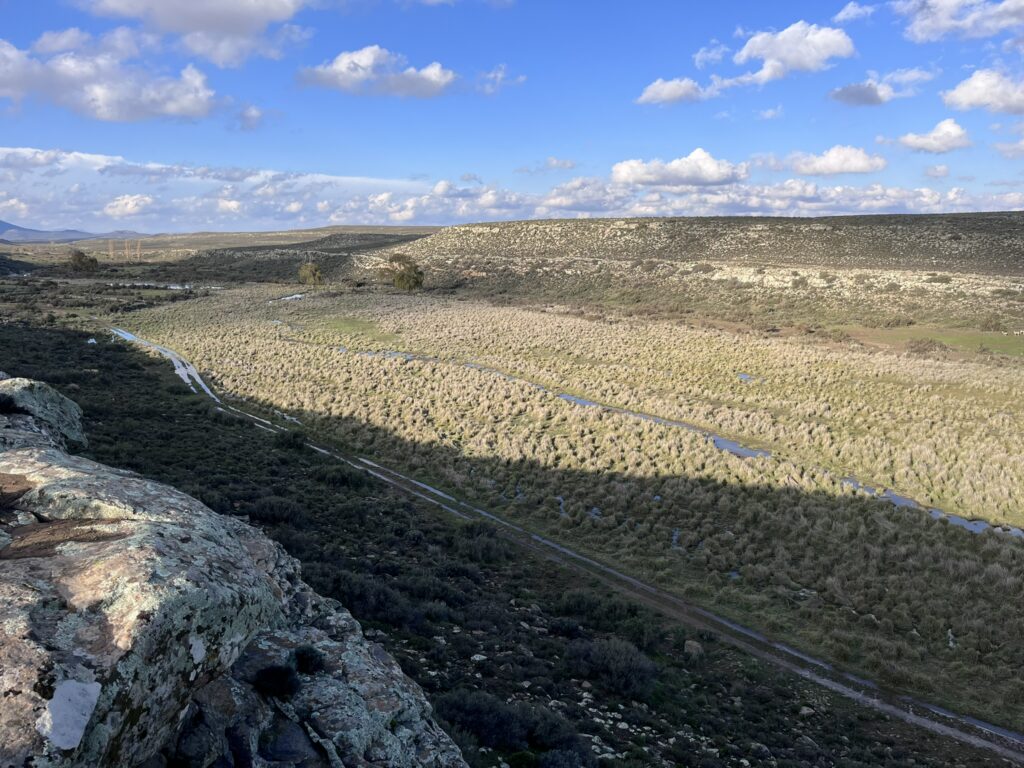
Pic: Philip Frenzel-Daniels
Supported by the Adour Garonne Water Agency, Expertise France, the French Ministry of Environment and the OFB, the project operated through 2025 and 2026, and was advanced through three complementary areas of activity: i) developing practical approaches for improving freshwater ecosystem information and its application in national and international reporting, ii) strengthening regional knowledge and technical cooperation, and iii) connecting southern African experience to international wetland and biodiversity processes.
Turning South Africa’s National Wetland Inventory multi-scale approach into practical guidance
Objective (i) was advanced through a small sub-project called “Advancing a multi-scale approach to wetland inventory: a pilot for Southern Africa”, also referred to as the Multi-scale Wetland Inventory Pilot Project (MWIPP).
A central aim was to gather new field-based data and strengthen practical workflows, incorporating this into a national wetland inventory that is “fit for purpose” for biodiversity planning, reporting into national and global indicators, climate change adaptation and restoration planning.
MWIPP brought together SANBI, OFB, and a specialist consultancy team (Freshwater Consulting and the University of KwaZulu-Natal), to develop a technical guideline documenting the South African National Wetland Inventory multi-scale approach to freshwater ecosystem mapping, assessment, and reporting; to explore practical approaches to strengthen the available data for the arid region of South Africa through focussed field data collection and mapping; and to explore sub-national red listing of arid-region wetland ecosystems across South Africa, Namibia, Botswana and Angola.
The initiative allowed for a short-term technical consultancy to work within the framework and data workflows developed by SANBI’s Freshwater Biodiversity Programme over recent years and to incorporate field-based wetland characterisation into national ecosystem assessment together with Earth Observation, desktop mapping and other existing datasets, to strengthen wetland information for management and reporting.
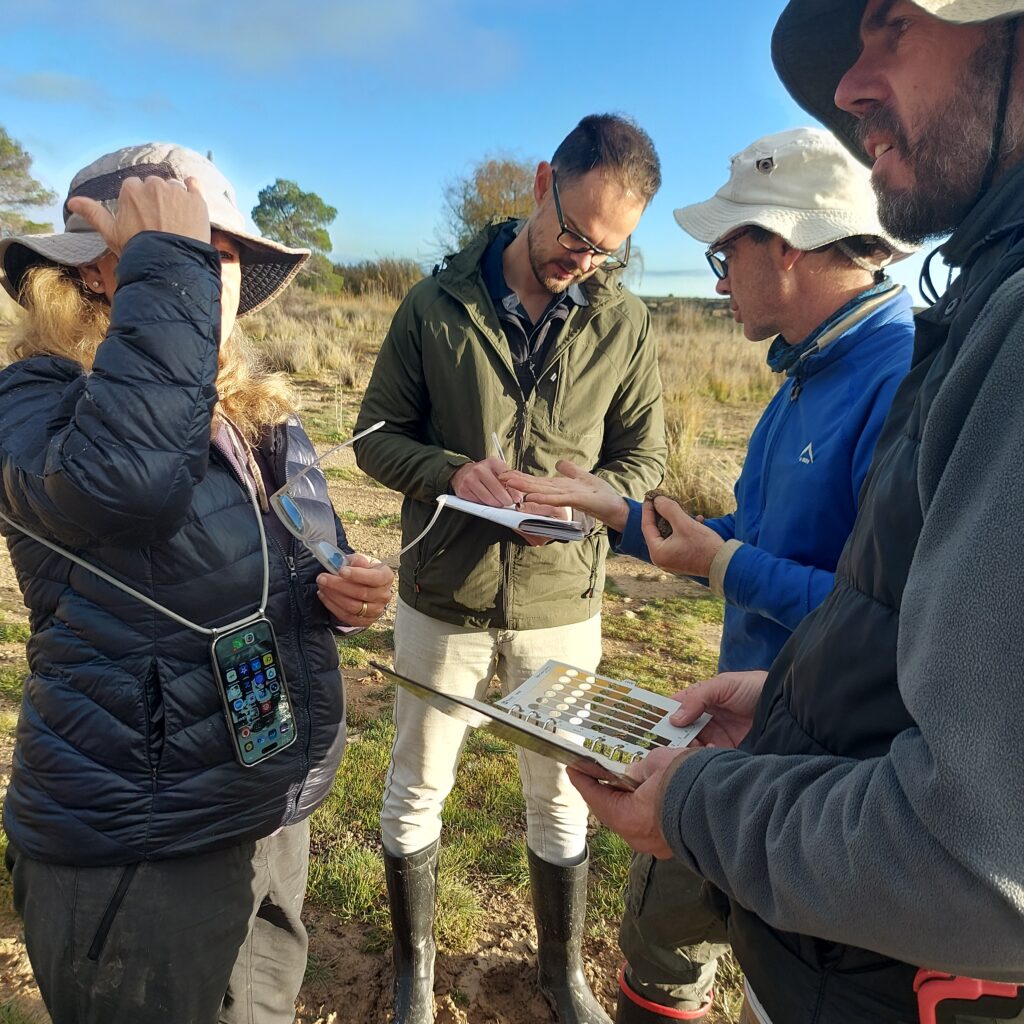
Pic: Nancy Job
Three essential components for every national wetland inventory
MWIPP focused on three fundamental attributes of SANBI’s national wetland inventory approach in selected arid wetlands:
- Extent: Where wetlands occur and how their spatial extent can be identified and mapped.
- Type: How wetland ecosystems can be consistently classified and characterised.
- Ecological Condition: The state of wetland ecosystems, including the pressures and changes affecting them.
Together, these attributes provide an important foundation for understanding wetland ecosystems, assessing their conservation status, identifying management priorities and monitoring environmental change.
The sub-project also integrated species information, ecosystem red listing and local knowledge into wetland inventory, strengthening its value for biodiversity assessment and conservation planning.
Taking southern African wetland priorities to the region and global stage – four milestones of the SANBI/OFB partnership
As a short pilot initiative, the SANBI/OFB collaboration was able to contribute to stronger national wetland information systems and prepare a foundation for continued collaboration beyond project completion. Regional cooperation and technical knowledge exchange were important components of the project, helping to connect freshwater expertise, share experiences and explore common challenges in wetland mapping, assessment and reporting across southern Africa.
1. Strengthening regional knowledge through the OKACOM workshop
In July 2025, with support from the project, SANBI experts participated in the regional workshop “Monitoring Trajectories of Loss and Change for the Cubango-Okavango River Basin”, held in Maun, Botswana.
The workshop was led by the PLuS Alliance together with Okavango Research Institute, and OKACOM, and brought together researchers, water managers, policymakers and technical experts to exchange knowledge and discuss approaches to freshwater ecosystem mapping, biodiversity assessment and ecosystem services within the Cubango-Okavango River Basin.
SANBI’s participation provided an opportunity to contribute technical expertise in freshwater ecosystem mapping and assessment, learn from regional experiences and explore challenges associated with freshwater and transboundary data.
2. From wetland information to decision-making – regional shared learning
Reliable wetland information is essential for ensuring that freshwater ecosystems are appropriately considered in conservation, environmental management and development decisions.
From 5 to 9 October 2026, SANBI and OFB co-organised a regional technical workshop in Johannesburg, South Africa, bringing together freshwater scientists, biodiversity specialists, government representatives, and technical practitioners from South Africa, Angola, Botswana and Namibia.
The workshop, “Mapping, classification and reporting on freshwater ecosystem types: a southern Africa technical workshop”, provided an opportunity for participants to share country experiences, explore technical approaches and identify practical priorities for strengthening national wetland inventories.
The workshop focussed on regional technical collaboration to develop approaches for improving national wetland inventories. Discussions focused on the three fundamental components of an inventory (wetland extent, ecosystem type and ecological condition) and also covered:
- desktop and field-based methods for jointly assessing selected wetland ecosystem types in South Africa’s arid regions, to strengthen classification and mapping
- refining the information needed for more reliable wetland inventories
- practical workflows for compiling, updating and maintaining inventory data
- continued exchange of country experiences, technical methods and lessons across South Africa, Namibia, Botswana and Angola
- areas for further technical cooperation, and opportunities to scale up the project’s approaches
Through the workshop, attendees explored how improved wetland mapping, ecosystem classification and ecological condition assessment can support the practical application of national wetland inventory into:
- National Biodiversity Strategies and Action Plans (NBSAPs): Supporting the integration of freshwater ecosystem information into national biodiversity priorities and actions.
- Ramsar Convention on Wetlands: Supporting wetland information needs and reporting under the Convention’s Fifth Strategic Plan.
- Kunming–Montreal Global Biodiversity Framework: Strengthening the evidence available for national biodiversity monitoring and reporting.
- Red List of Ecosystems assessments: Providing information that can contribute to assessments of ecosystem risk.
- Climate change adaptation: Improving understanding of freshwater ecosystems and their contribution to climate resilience.
- Ecosystem restoration: Helping identify priorities for restoration planning and monitoring.
- Biodiversity and spatial planning: Supporting the consideration of freshwater ecosystems in environmental assessments, land-use planning and conservation decisions.
By strengthening the connection between freshwater ecosystem information and its practical use, the initiative sought to support more informed and coordinated decision-making across southern Africa.
Several priorities emerged from the technical discussions and country exchanges at the workshop:
- Developing practical and scalable approaches to field and desktop wetland mapping.
- Strengthening data-sharing arrangements and national data custodianship.
- Establishing desktop-based baselines for assessing wetland ecological condition.
- Improving the integration of species information into wetland ecosystem red listing and other biodiversity assessments.
- Using targeted field verification to improve the accuracy and reliability of wetland maps and assessments.
The discussions highlighted the importance of sustained regional collaboration, accessible technical approaches and strengthening national capacity to develop, maintain and use wetland information.
The workshop provided a foundation for further cooperation between participating countries and technical partners, with opportunities to build on the merging priorities.
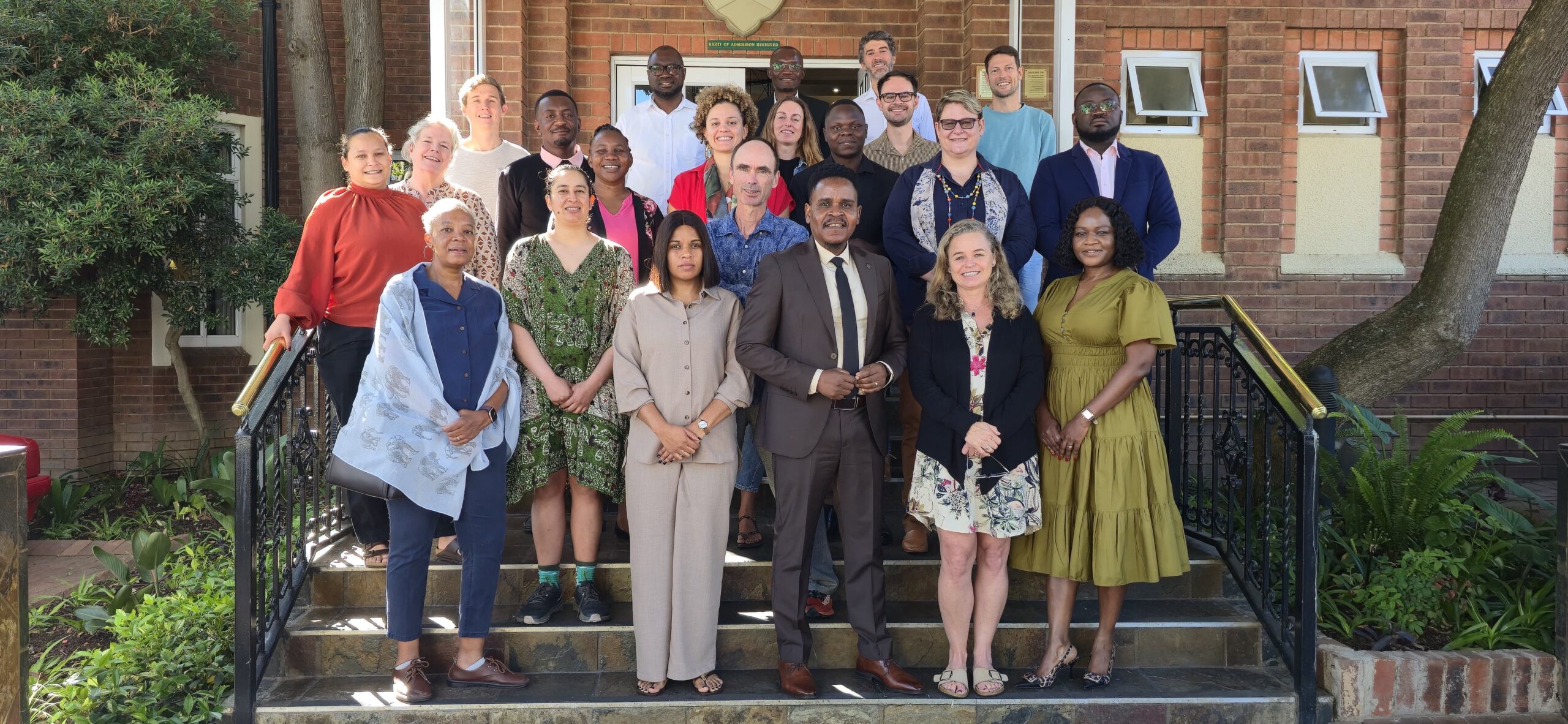
Pic: Stanley Tshitwamulomoni
3. Engagement at Ramsar COP15
In July 2015, the project supported participation at the 15th Meeting of the Conference of the Contracting Parties to the Ramsar Convention on Wetlands (Ramsar CoP15), held in Victoria Falls, Zimbabwe.
SANBI participated as part of South Africa’s official delegation and contributed to the engagement around the Southern African Ramsar Regional Initiative (SARRI).
Participation allowed South Africa to share its experience in developing and applying technical information, including the National Wetland Map, and to strengthen relationships with regional and international partners. Discussions explored how freshwater ecosystem information can better support planning, reporting and commitments under the Ramsar Convention and related agreements.
4. Engagements at CBD CoP17
Conversations also took place at the Convention on Biological Diversity’s Conference of the Parties (CBD CoP 17), in Armenia in October 2026. Freshwater ecosystems were highlighted as needing attention in the global review of collective progress in the implementation of the Kunming-Montreal Global Biodiversity Framework (KMGBF) – as the information from the seventh National Reports to the CBD reveal terrestrial biases remain. The project’s results were used in several sessions and events at CoP17, including a meeting of the Global Biodiversity Agencies Network – where the theme was ‘Freshwater Ecosystems: Monitoring, Conservation, and Restoration’.
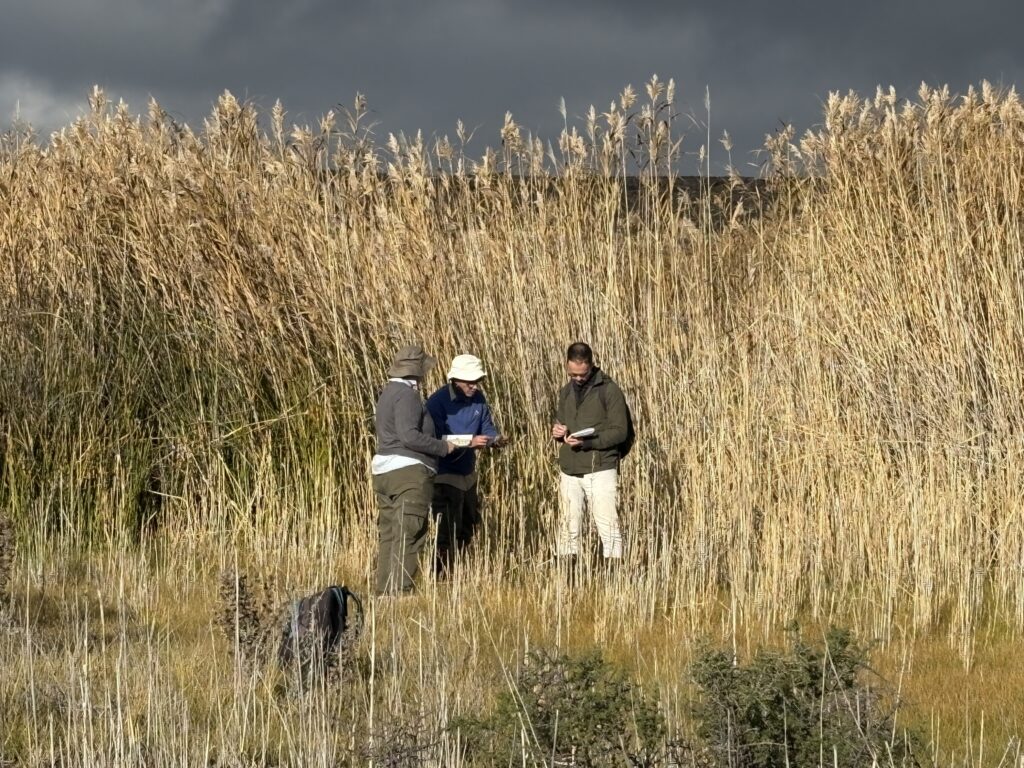
Pic: Justine Ewart-Smith
Looking ahead
Protecting southern Africa’s freshwater ecosystems requires more than better maps. It requires reliable information, shared approaches, technical capacity and sustained collaboration between countries and institutions.
By connecting regional scientific and technical expertise with biodiversity planning, international reporting and climate change adaptation, the project helped establish a foundation for more informed decisions about freshwater ecosystems.
Building on the technical work and regional exchanges undertaken through the project, opportunities will be explored to secure additional funding and expand the approaches developed through MWIPP. This could support further improvements to national wetland inventories, strengthen technical capacity and encourage continued collaboration between participating countries.
The longer-term aim is to ensure that freshwater ecosystems are better understood, better represented in biodiversity planning and reporting, and better protected across southern Africa.
Project partners and supporters
The project brought together the South African National Biodiversity Institute (SANBI) and the French Biodiversity Agency (OFB), working with regional partners and technical specialists.
The project was implemented with support of the Adour Garonne Water Agency, Expertise France, the French Ministry of Environment and OFB.
Related resources
SANBI news article: Regional technical workshop, October 2026
MWIPP / technical resources – to be made available soon
Regional workshop report – to be made available soon
National Wetland Map factsheet
Project contact
Nancy Job
Lead: Freshwater Programme
Email: n.job@sanbi.org.za